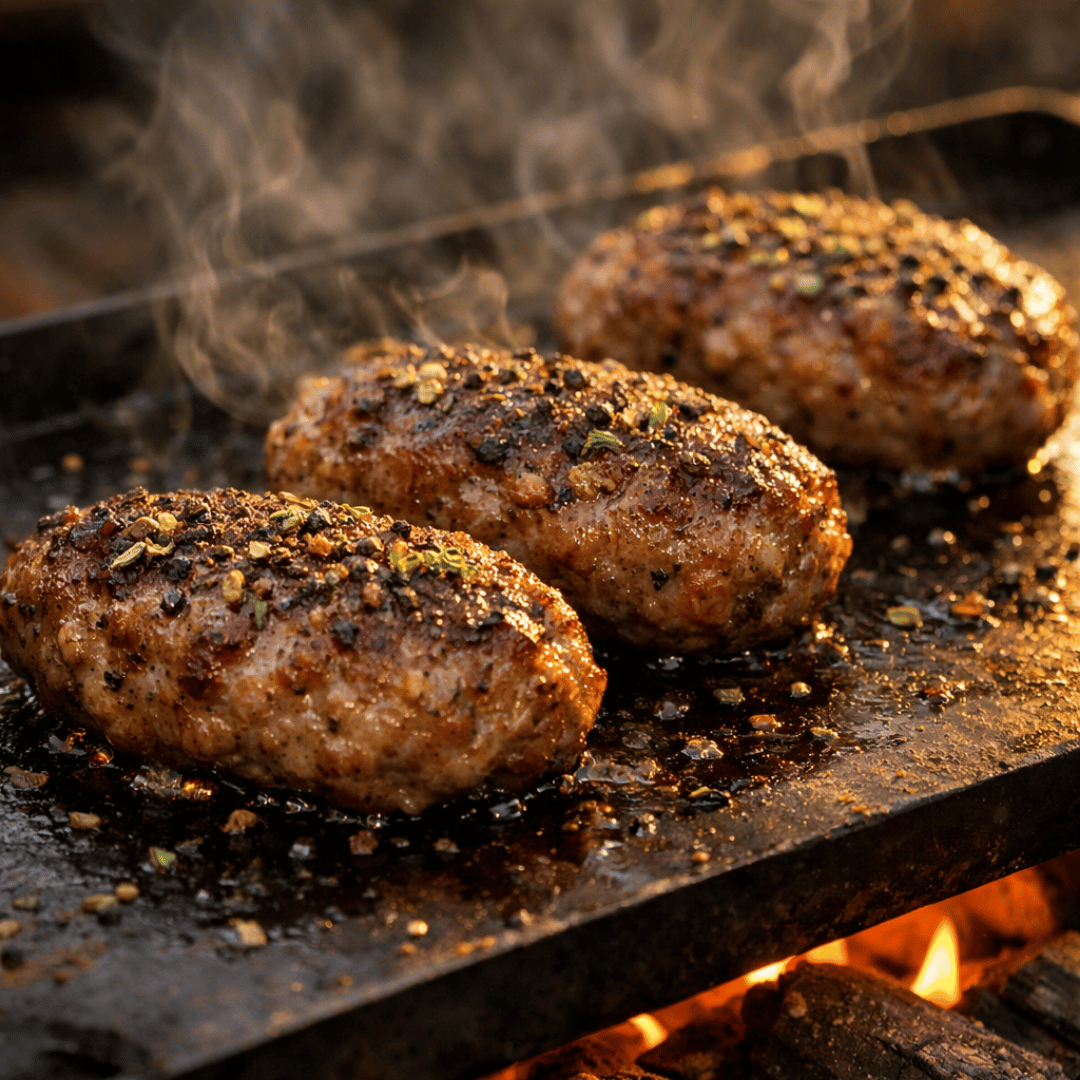
Article: Kielbasa on the Grill: Poland's Favourite BBQ, Done Right
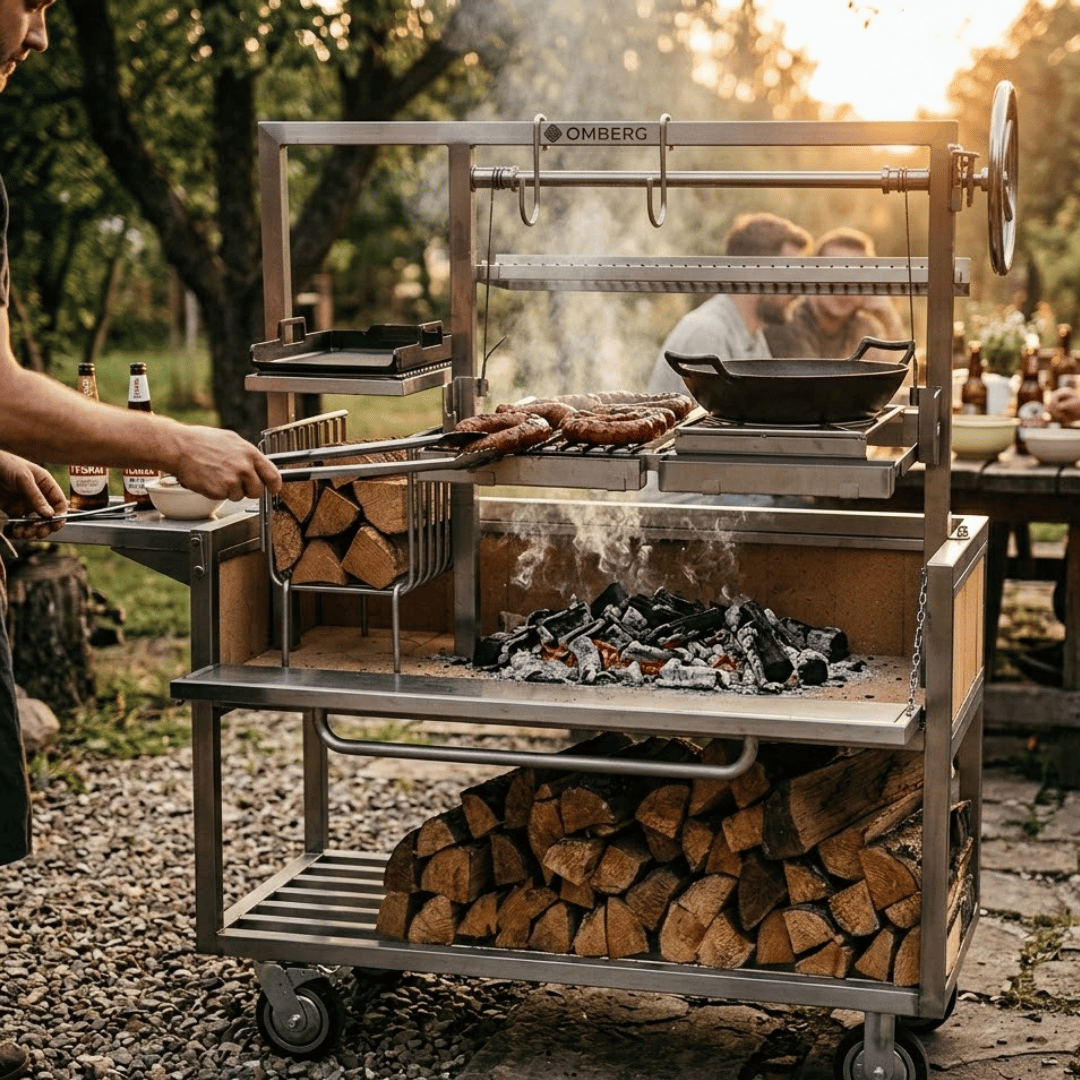
Kielbasa a la parrilla: la barbacoa favorita de Polonia, como debe ser
Poland has been grilling kielbasa over fire for centuries. The asado method takes it further than it has ever been.
Ask a Polish person what happens on a warm Saturday afternoon and the answer comes quickly. The fire goes on. The kielbasa comes out. Cold beer appears from somewhere. This is grillowanie — the Polish outdoor cooking tradition — and it is one of the most genuine food cultures in Europe.
Polish people do not grill because it is fashionable. They grill because they have always grilled. Sausage over fire is not a seasonal trend in Poland. It is a way of life that spans generations, regions, and family recipes passed down without being written anywhere.
The Omberg asado grill does not arrive in Poland to teach Polish cooks how to grill. It arrives to give them the best possible fire to do what they already do brilliantly.
A kielbasa cooked over a steady, controlled bed of hardwood charcoal on an open Argentine parrilla develops a crust and a depth of flavour that a gas grill or a simple kettle cannot replicate. The heat is cleaner. The smoke is more subtle. The control is more precise. The result is kielbasa that tastes exactly like kielbasa should — but better than you have had it before.
Understanding Kielbasa
The word kielbasa simply means sausage in Polish, and it covers dozens of regional varieties, each with its own character, spicing, and tradition. For grilling on an open fire, the choice of kielbasa matters.
Smoked kielbasa is the most widely grilled variety. It has been cured and cold-smoked before it reaches you, meaning it is already cooked. On the grill you are adding a second layer of heat and char on top of the existing smoke flavour. The skin splits and caramelises. The inside heats through and stays juicy. Cook time is 12 to 15 minutes.
Biala kielbasa (white kielbasa) is a fresh, raw sausage made from pork with garlic, marjoram, and pepper. It has not been smoked or cured. Because it is raw it needs a longer, more careful cook over moderate heat. Total cook time is 20 to 25 minutes. The result is something quite different from smoked kielbasa — softer skin, lighter colour, and a cleaner pork flavour that the marjoram lifts beautifully.
Both varieties are excellent on the Omberg Asado Gaucho 1200. The 120 cm cooking surface gives you room to run smoked kielbasa on the hotter central zone and biala kielbasa on the slightly cooler edges simultaneously. Different heat needs, same fire, same grill.
Ingredients
Serves: 4 to 6 people Prep time: 10 minutes Cook time: 12 to 25 minutes depending on variety Difficulty: Easy
The sausages:
- 600 to 800 g smoked kielbasa, good quality from a Polish butcher or deli
- 400 g biala kielbasa (fresh), if available and desired
- 1 tablespoon sunflower oil for brushing
For the fire:
- Good hardwood charcoal or quebracho wood
- Chimney starter or natural firelighters
To serve:
- Polish mustard — both mild and hot if possible
- Fresh horseradish or prepared horseradish sauce
- Sauerkraut, warmed on the grill in foil alongside
- Dark rye bread or fresh bread rolls
- Dill pickles on the side
- Cold Polish beer, always
Optional but recommended:
- 2 large onions, sliced for grilling on the Carbon Steel Griddle
- 2 red peppers, halved and deseeded for grilling alongside
Instructions
Step 1: Build Your Fire
Start the fire 40 to 50 minutes before you want to cook. Kielbasa needs a steady medium heat, not an enormous fire. You want consistent, even heat that chars the skin gradually without burning the outside before the inside is hot through.
Use a chimney starter with good hardwood charcoal. Fill it two thirds full, light from the bottom, and wait until the coals are fully lit and grey on the surface before pouring them into the base of the Omberg Asado Gaucho 1200.
Spread the coals evenly across the base. Set the grates at mid height. This is your cooking position for the whole session.
Target temperature: 180 to 200 degrees Celsius. Hold your hand 15 cm above the grate. You should be able to hold it there for 4 to 5 seconds. If you have to pull away faster, give the coals another 5 minutes to settle before you start cooking.
Step 2: Prepare the Kielbasa
Take the kielbasa out of the refrigerator 20 minutes before cooking. Cold sausage straight onto a hot grill causes the outside to tighten before the inside has had a chance to warm through. Room temperature gives you a more even cook.
Brush the kielbasa lightly with sunflower oil. This helps the skin colour evenly and prevents it sticking to the grate.
Do not pierce the kielbasa before grilling. This causes the sausage to lose its juices and dry out during the cook. Leave the casing intact.
If you are using smoked kielbasa you can make a few shallow diagonal cuts across the top — about 3 to 4 mm deep — to help the skin open and caramelise slightly faster on the fire. This is optional. If you are using biala kielbasa, leave it completely untouched.
Step 3: Start the Onions and Peppers
Before the kielbasa goes on, place the Carbon Steel Griddle on one side of the Omberg 1200 grate. Add a small amount of oil and when it is hot, add the sliced onions with a pinch of salt. Cook slowly over moderate heat, stirring occasionally. The onions need 15 to 20 minutes to caramelise properly and they should start before the kielbasa.
Place the halved red peppers cut side down directly on the grate alongside the griddle. They need 15 to 20 minutes over moderate heat until soft and slightly charred. The sweetness of the roasted pepper alongside smoky kielbasa is a combination that Polish grillers have known about for a long time and for good reason.
Step 4: Grill the Kielbasa
Place the smoked kielbasa on the hotter central zone of the grate. Turn every 3 to 4 minutes. You are looking for an even, all-over caramelisation of the skin with slight splitting at the surface after 10 to 12 minutes. When the skin shows visible splits and the outside is deeply golden with some char at the edges, the smoked kielbasa is ready.
If you are cooking biala kielbasa at the same time, place it on the cooler edge of the grate. Fresh kielbasa needs more time and more gentle heat than smoked. Turn every 4 to 5 minutes. Total cook time is 20 to 25 minutes. Internal temperature should reach 70 degrees Celsius before you remove it from the fire.
Use the long-handled tongs from the Omberg BBQ Tool Set throughout. Kielbasa casings are easy to puncture with a fork. Tongs protect the casing and keep the juices inside where they belong.
Step 5: Warm the Sauerkraut
Five minutes before the kielbasa is ready, place a foil parcel of sauerkraut with a tablespoon of butter and a pinch of caraway seeds directly on the grate at the edge of the fire. It needs only 5 minutes to heat through. Warm, slightly buttery sauerkraut alongside crispy grilled kielbasa is one of the great Polish combinations and it takes almost no effort to prepare this way.
Step 6: Rest Briefly and Serve
Remove the kielbasa from the grill and rest on a wooden board for 3 to 4 minutes. The juices inside a freshly grilled sausage are under pressure from the heat. A brief rest lets them settle before the first cut.
Serve directly on the board with warm sauerkraut, caramelised onions, grilled peppers, rye bread, mustard, and horseradish alongside. Let everyone eat from the board. This is how Polish grillowanie works best — shared, relaxed, and with good beer in hand.

Pro Tips for Perfect Kielbasa on the Asado Grill
Buy from a Polish butcher or deli. Supermarket kielbasa is convenient but butcher kielbasa from a dedicated Polish deli is noticeably better. The meat quality is higher, the smoking is more careful, and the casing holds up better on a real open fire. In the Netherlands and Germany, Polish delis are easy to find in most larger cities.
Do not rush the fire. The most common mistake with kielbasa on the grill is putting the sausages over too much heat too quickly. High heat splits the casing before the inside is hot and you lose the juices onto the coals. Medium heat, patience, and regular turning produces far better results.
The diagonal cuts on smoked kielbasa are worth doing. Three or four shallow diagonal cuts across the top allow the skin to open naturally on the fire and create a slightly caramelised, lightly charred edge at each cut. This is the texture that makes grilled kielbasa memorable.
Sauerkraut on the grill is a five-minute upgrade. Wrapping sauerkraut in foil with butter and caraway seeds and placing it on the edge of the grate during the last few minutes of the sausage cook costs almost nothing and transforms the plate. Do not serve kielbasa without it.
The Asado Wok Ring opens up a world of Polish outdoor cooking. Bigos — the traditional Polish hunter's stew of sauerkraut, kielbasa, and mushrooms — is cooked in a heavy pot. The Asado Wok Ring lets you place a cast iron pot directly over the fire on the parrilla, making an outdoor bigos on the same grill as your kielbasa a genuinely excellent option for a full Polish spread.
What to Serve With It
Polish mustard is the non-negotiable accompaniment. Both mild and hot varieties on the table give guests the choice. Kosciuszko mustard or a good Polish Sarepska are the right ones to look for.
Horseradish alongside kielbasa is deeply Polish and genuinely good. Fresh grated horseradish if you can find it. Prepared horseradish sauce from a jar if not. Either works.
Warm sauerkraut with caraway seeds and butter. Five minutes on the grill edge in a foil parcel and it is ready.
Rye bread or fresh rolls. Dark rye bread torn at the table alongside. The slight sourness of a good Polish dark rye against the richness of the grilled sausage is one of those flavour combinations that works every time.
Dill pickles on the side. Cold, sharp, crunchy. They do the job of cutting through the fat of the kielbasa the same way chimichurri does for an Argentine cut. Do not underestimate them.
Chimichurri as a cross-cultural addition. Fresh herb sauce from the Argentine asado tradition works surprisingly well with kielbasa. The acidity and parsley freshness lift the smoky richness of the sausage. It is not traditional Polish BBQ but it connects the two grilling cultures in an interesting way. (See our chimichurri recipe on the Omberg blog)
Beer and Drink Pairings
This is the section that deserves the most space in a Polish recipe. Beer is the natural and culturally correct drink alongside kielbasa on the fire.
Polish beer, first and best choice: A cold Żywiec or Tyskie pilsner alongside grilled kielbasa is simply correct. Clean, cold, and refreshing between bites of something smoky and rich. Żywiec has a slight malt sweetness that works particularly well alongside smoked kielbasa.
Polish craft beer, interesting option: Polish craft brewing has grown significantly in recent years. A good Polish porter — dark and malt-forward — alongside grilled kielbasa is a genuinely excellent pairing. The dark malt character and coffee-like depth echoes the smokiness of the sausage beautifully. Look for Browar Artezan, Browar Kingpin, or Pinta for craft options available in Poland and through specialty bottle shops in the Netherlands and Germany.
German beer for Dutch and German guests: A Märzenbier or Dunkel from a German brewery sits comfortably alongside kielbasa for guests who prefer a more familiar style. The malt sweetness of both works well with smoked sausage.
Wine, for those who prefer it: A light, earthy red works if guests want wine rather than beer. A Côtes du Rhône or a simple French Pinot Noir is the right style. Nothing too heavy or tannic — kielbasa is already rich and smoky and a big red competes rather than complements.
Non-alcoholic: A cold homemade kompot — the traditional Polish fruit drink made from simmered berries or cherries — is deeply traditional alongside a Polish BBQ. Refreshing, slightly sweet, and completely right for the occasion.
The Cultural Story
Polish grilling culture has a long history dating back to rural traditions that predate any written record of it. What began as practical outdoor cooking over open wood fires became a cornerstone of Polish social life — a reason to gather, to stay outside, and to eat together without hurrying.
The gaucho tradition of South America and the grillowanie tradition of Poland share more than most people realise. Both are built around communal outdoor cooking. Both centre on meat over a real fire, not a gas burner. Both involve long afternoons of eating, drinking, and good company rather than quick meals that disappear in twenty minutes.
What Argentine asado culture has that Polish grillowanie has traditionally lacked is a grill designed specifically for open-fire cooking at this level. The Argentine parrilla, with its adjustable grates and wide, flat cooking surface, was engineered for exactly the kind of long, communal outdoor cook that Polish culture already values.
The Omberg Asado Gaucho 1200 brings that engineering to the Polish garden. It does not ask Polish cooks to change their traditions. It gives them a better fire to cook those traditions over.
FAQ
Where do I buy good kielbasa in the Netherlands or Germany?
Polish delis and delicatessens are the best source outside of Poland. Most larger Dutch and German cities have Polish food shops where good quality smoked and fresh kielbasa is available. Online Polish food suppliers in both countries also ship kielbasa. In Germany look for shops called "Polnische Lebensmittel." In the Netherlands search for "Poolse supermarkt" in your city.
What is the difference between smoked kielbasa and biala kielbasa for grilling?
Smoked kielbasa is already cooked and needs 12 to 15 minutes on the grill to heat through and develop a caramelised crust. Biala kielbasa is fresh and raw and needs 20 to 25 minutes over moderate heat until the internal temperature reaches 70 degrees Celsius. Both are excellent but they require different heat management on the grill.
Can I cook kielbasa on the Omberg Built-In 1200?
Yes. The Asado Gaucho 1200 Built-In is ideal for this recipe. The wide cooking surface lets you run both kielbasa varieties simultaneously at different heat zones with the Carbon Steel Griddle running alongside for onions and peppers.
Why does my kielbasa skin split and lose juice on the grill?
Two reasons. Either the fire is too hot, or the sausage went directly from the refrigerator onto the fire. Take kielbasa out 20 minutes before cooking. Use moderate rather than high heat. Turn regularly rather than leaving it over a single hot spot. The casing should colour gradually and open naturally.
Can I cook bigos on the Omberg grill alongside the kielbasa?
Yes, and it is worth doing. The Asado Wok Ring from Omberg lets you place a cast iron pot directly on the parrilla over the fire. A proper outdoor bigos — kielbasa, sauerkraut, mushrooms, and spices, cooked slowly in cast iron on the same fire as your grilled sausage — is one of the best Polish outdoor cooking experiences you can put together.
Is there a Polish equivalent of chimichurri to serve with kielbasa?
Not a direct equivalent, but a cold Polish garlic and dill sauce called sos czosnkowy comes close in function. Sour cream or thick yoghurt base, fresh garlic, dill, salt, and a squeeze of lemon. The coolness and acidity of the sauce alongside hot, smoky kielbasa works the same way chimichurri does alongside Argentine cuts.
The Best Fire Poland Has Never Had
Polish grillowanie culture is already one of the best outdoor cooking traditions in Europe. It knows what it is doing. It has been doing it for a long time.
The Omberg Asado Gaucho 1200 gives that tradition the fire it deserves. 120 cm of cooking surface for kielbasa, onions, peppers, and sauerkraut running all at once. Height-adjustable grates for managing the difference between smoked and fresh sausage on the same fire. Open-fire design that gives hardwood charcoal the space to do what it does best.
This is not a foreign grill imported into Polish culture. It is the best possible version of the fire that Polish culture already loves.
Shop the Omberg Asado Gaucho 1200 Browse All Omberg Accessories Explore More Asado Recipes