Vacío: Comment cuire correctement le bifteck de flanc à l'asado argentin
À chaque asado argentin, il y a un moment — généralement vers la deuxième heure, lorsque le feu s’est stabilisé en une lueur constante et que la conversation s’est calmée pour devenir plus feutrée et plus posée — où quelqu’un soulève le bord de l’ vacío pour vérifier la croûte. La graisse a fondu pour prendre une teinte ambrée et craquante. L’odeur mêle à parts égales la fumée, le bœuf et quelque chose de plus ancien, quelque chose qui appartient à la campagne et aux après-midis sans hâte.
Ce moment-là n'arrive pas par hasard.
Vacío C'est sans doute la pièce de viande la plus emblématique de l'asado argentin. Ce n'est ni la plus spectaculaire, ni la plus chère, mais c'est celle que l'on retrouve le plus souvent lors des réunions de famille, des barbecues dans les estancias et dans les véritables « parrillas » de la Pampa. Si vous voulez comprendre l'essence même de la culture de l'asado argentin, c'est par là qu'il faut commencer.
Ce guide vous apprendra exactement comment cuisiner correctement l'vacío : du choix du bon morceau à la maîtrise du feu, en passant par l'obtention d'une croûte parfaite sur la couche de graisse et la présentation digne de ce nom.

Qu'est-ce que l'« Vacío » ? Comprendre cette coupe
Vacío Ce terme signifie littéralement « vide » ou « creux », en référence à la cavité d’où provient ce morceau. Il se situe sur le flanc de la vache, entre le quartier arrière et la dernière côte, et se comporte différemment de la plupart des autres morceaux de bœuf que vous connaissez peut-être.
Dans la boucherie nord-américaine, le « flank steak » s’en rapproche le plus — mais cette comparaison a ses limites. L’ vacío e argentin est plus épais, comporte une couche de graisse caractéristique et une fine membrane, et est généralement vendu en portions bien plus grandes, souvent comprises entre 2 et 4 kg (4,5 et 9 livres). Cette couche de graisse n’est pas un défaut qu’il faut retirer. C’est justement ce qui fait tout l’intérêt de ce morceau.
Lorsqu’elle est cuite comme il se doit — à feu doux, lentement et avec patience —, la graisse fond au fil des heures, arrosant la viande de l’extérieur vers l’intérieur, ce qui forme une croûte que les « asadores » expérimentés décrivent tout simplement comme la meilleure partie. L’intérieur reste rosé, tendre et très savoureux, avec une texture à grain lâche qui se découpe magnifiquement dans le sens contraire des fibres.
Pourquoi les « asadores » argentins l'adorent :
- Très tolérant — supporte des temps de cuisson plus longs sans se dessécher
- La couche de graisse arrose la viande d'elle-même tout au long de la cuisson
- Rendement gustatif élevé par rapport au coût
- Permet de nourrir facilement tout un groupe grâce à une seule coupe
- Un incontournable de la sélection de parrillas de tout asado traditionnel

Ingrédients
Pour 4 à 6 personnes. Temps de préparation : 15 minutes. Temps de cuisson : 2 h 30 à 3 heures. Niveau de difficulté : intermédiaire.
Pour la viande :
- 1 poisson entier de l'espèce « vacío » (2,5 à 3,5 kg / 5,5 à 8 livres), avec la couche de graisse intacte
- Sel marin gros (sal gruesa) — à saupoudrer généreusement
- Poivre noir fraîchement moulu (facultatif — les traditionalistes peuvent s'en passer)
Pour le feu :
- Charbon de bois de feuillus ou bois de quebracho (de préférence)
- Allume-feu naturels ou allume-cheminée
- Une main patiente
Pour servir :
- Chimichurri (voir la suggestion de lien interne ci-dessous)
- Pain croustillant (pan casero)
- Chimichurri rojo ou salsa criolla
- Du vin rouge — un Malbec, de préférence
Chez Omberg, nous pensons que la liste des ingrédients d’un « vacío » doit rester concise. C’est la découpe et la cuisson qui font tout. La sobriété est une forme de respect.
Instructions
Étape 1 : Préparer le feu
Commencez à allumer votre feu 60 à 75 minutes avant l'heure prévue pour la cuisson. Vous ne faites pas griller vacío directement sur les flammes : vous créez un lit de braises de bois dur, stable et homogène.
Utilisez du bois de quebracho ou du charbon de bois dur de bonne qualité. Évitez à tout prix le liquide allume-feu ; il laisse un goût chimique qui n’a pas sa place à côté d’une viande aussi savoureuse. Un allume-barbecue en forme de cheminée est l’outil idéal dans ce cas.
Température cible au niveau de la grille : 200–250 °F (90–120 °C). Il s'agit d'une cuisson lente et minutieuse. Placez votre main à 5 pouces au-dessus de la grille : vous devriez pouvoir la maintenir à cette hauteur pendant 5 à 7 secondes. Si la température est plus élevée, vous risquez de faire fondre la graisse trop rapidement, ce qui provoquera des flammes et une cuisson inégale.
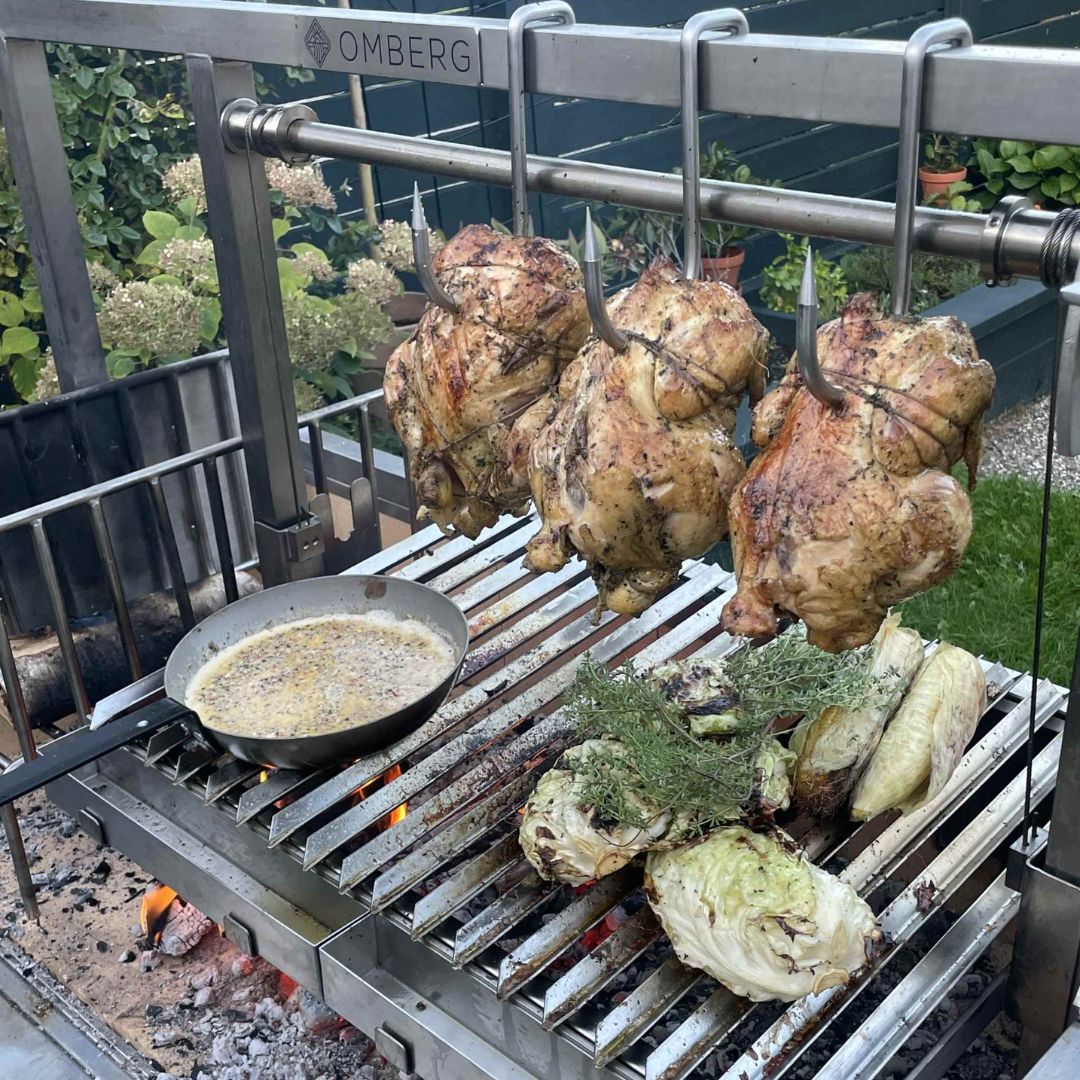
C'est là que la conception de votre barbecue fait toute la différence. Une « parrilla » argentine de bonne facture est équipée de grilles réglables en hauteur, ce qui vous permet de contrôler la chaleur avec précision sans avoir à lutter contre les flammes.
Étape 2 : Assaisonner le Vacío
Posez l'vacío e à plat — la partie la plus épaisse vers le haut — sur une surface propre. Saupoudrez généreusement les deux faces et les bords de gros sel marin. Ne frottez pas. Tapotez légèrement et laissez reposer.
Salez la viande au moins 30 minutes avant de la mettre sur le gril, voire jusqu'à 1 heure à l'avance. Cela permet d'éliminer l'humidité de surface et au sel de commencer à pénétrer dans la viande. Certains cuisiniers argentins préfèrent saler la viande au moment même où elle est posée sur le gril — les deux méthodes sont valables. Ce qui n'est jamais valable : ne pas assez saler vacío.
Étape 3 : Commencez par poser la couche de graisse vers le bas
C'est là que la plupart des cuisiniers non argentins commettent leur première erreur.
Déposezl' vacío , côté gras vers le bas, sur le gril. Cela peut sembler contre-intuitif si vous avez l'habitude de saisir et de retourner rapidement la viande, mais la logique est simple : il faut faire fondre la graisse lentement dès le début, en laissant la couche de graisse se transformer en croûte avant de retourner la viande.
Faites cuire le « fat cap » pendant 45 à 60 minutes à chaleur indirecte, côté gras vers le bas. Ne le touchez pas. Ne l'appuyez pas. Ne le déplacez pas. Faites confiance au feu.
Étape 4 : La cuisson longue — La patience, c'est tout l'art
Une fois la première phase de cuisson de la couche de graisse terminée, retournez l’ vacío e et poursuivez la cuisson, côté viande vers le bas, pendant encore 60 à 90 minutes, en surveillant le feu et en rajoutant du charbon si nécessaire pour maintenir une température constante.
Au cours de cette période :
- Veillez à ce qu’il reste une fine couche de braises sous la coupe — pas un feu ardent
- Si de la graisse coule et que des flammes s'élèvent, déplacez légèrement la pièce de viande sur le côté
- Vérifiez la température à cœur à l'endroit le plus épais : visez une température comprise entre 145 et 150 °F (63 à 65 °C) pour une cuisson à point, ce qui correspond à la cuisson idéale traditionnelle pour vacío
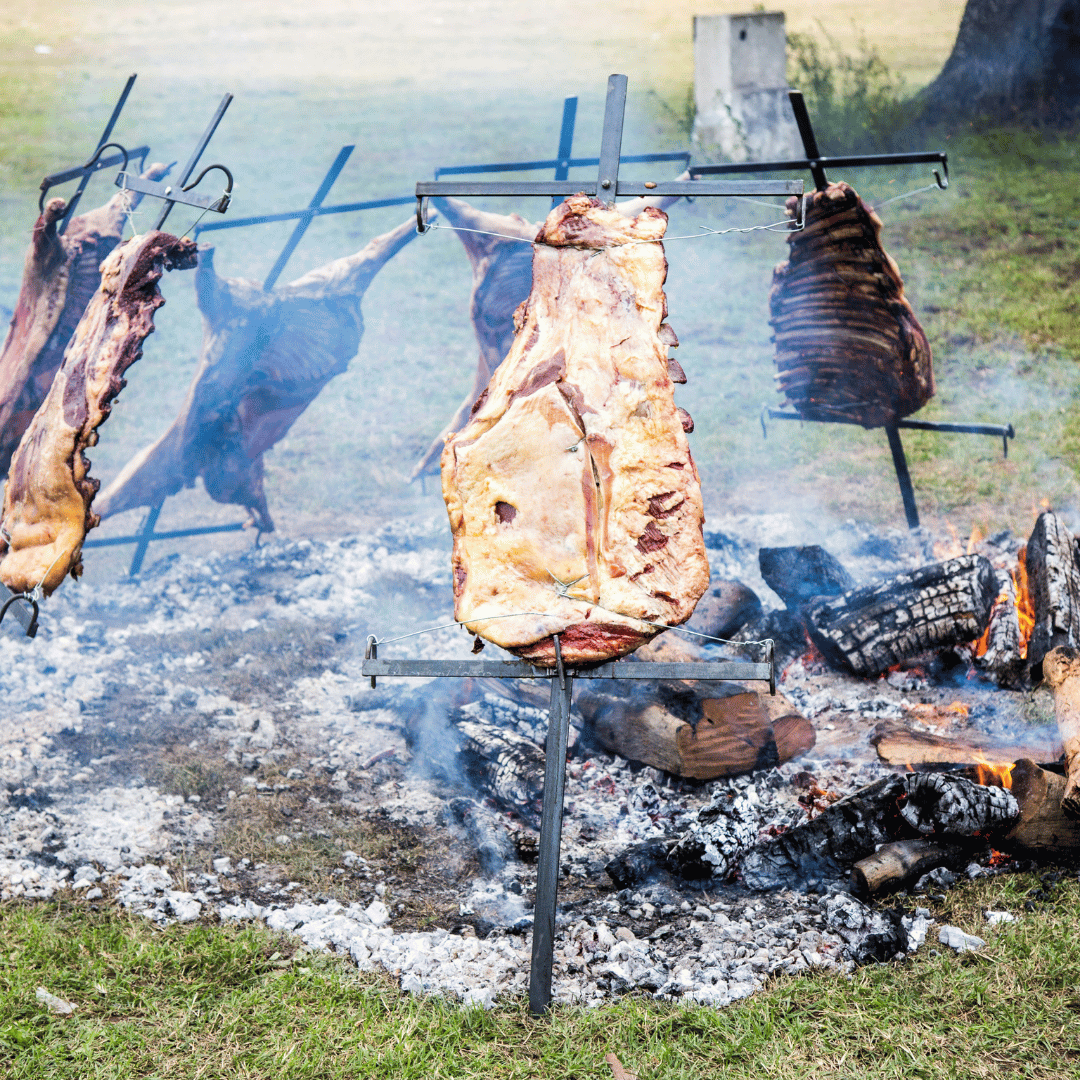
Durée totale de cuisson : 2 h 30 à 3 heures. Certains « asadores » expérimentés prolongent la cuisson jusqu'à 3 h 30 pour les morceaux plus volumineux, notamment lorsqu'ils utilisent la méthode « al asador » en croix.
Étape 5 : Le dernier retournement et la finition de la croûte
Au cours des 15 à 20 dernières minutes, replacez la couche de graisse de l’ vacío , côté gras vers le bas, et rapprochez légèrement les braises — ou abaissez la grille si votre parrilla le permet. L’objectif est d’obtenir un croustillant parfait sur cette couche de graisse : d’un doré intense, craquelée sur les bords, et se détachant légèrement de la viande.
C'est cette dernière étape qui fait la différence entre une bonne « vacío » et une expérience inoubliable.
Étape 6 : Laisser reposer la viande
Retirez la viande du gril et laissez reposer l'vacío e sur une planche en bois, la couche de graisse vers le haut, recouverte d'une feuille d'aluminium sans serrer, pendant au moins 10 à 15 minutes. Cette étape est incontournable. Les jus internes doivent se répartir uniformément avant de procéder à la première découpe.
Étape 7 : Trancher et servir
Coupez toujoursl' vacío e dans le sens contraire des fibres, en tranches généreuses d'une épaisseur de 1 à 1,5 cm. Les fibres s'étendent dans le sens de la longueur ; vous devez donc les couper perpendiculairement avec votre couteau. Servez immédiatement avec de l'chimichurri, du pain croustillant et un bon Malbec en accompagnement.
Conseils de pros pour un résultat parfait Vacío
Ne coupez jamais la couche de graisse. Jamais. Si votre boucher l'a déjà retirée, changez de boucher.
Utilisez du bois dur, et non des briquettes de charbon de bois. Le quebracho est la référence absolue. Un charbon de bois dur de bonne qualité constitue une alternative acceptable. Les briquettes peuvent faire l'affaire à la rigueur, mais elles ne produisent pas cette fumée pure et aromatique propre au vrai bois.
Tout l'art réside dans la maîtrise de la température. L'asado argentin ne se pratique pas à feu vif. Toute sa philosophie repose sur la patience et une chaleur douce et constante. Un thermomètre peut s'avérer utile, mais avec le temps, vous apprendrez à « lire » votre feu.
La membrane a son importance. Le « Vacío » est recouvert d’une fine membrane argentée sur un côté. Laissez-la en place pendant la cuisson : elle aide à maintenir la pièce intacte et s’enlève facilement une fois que la viande a reposé. Certains cuisiniers l’entaillent légèrement ; d’autres la laissent telle quelle.
Le repos est sacré. S'il y a bien une étape qu'il ne faut jamais précipiter, c'est celle du repos. Si vous coupez l'vacío e trop tôt, vous perdrez la moitié de son jus sur la planche. Attendez. Versez le vin. Laissez la viande finir de cuire.
Les meilleurs morceaux de viande à accompagner d'un « Vacío » lors d'un asado complet
Vacío Il est rare qu'il soit servi seul lors d'un asado argentin. Il fait généralement partie d'un assortiment plus large, accompagné de :
- Tira de asado — côtes courtes coupées en travers, l'autre grand classique argentin (lien interne : Comment cuisiner la tira de asado)
- Chorizo criollo — cuit dès le début sur le barbecue, servi en entrée
- La morcilla — le boudin noir, un accompagnement qui divise mais qui fait partie des traditions
- Mollejas — ris de veau, pour les plus audacieux
- Entraña — bavette, cuisson plus rapide, un bon choix si vos invités ont faim tôt dans la soirée
Un asado complet est une succession d’étapes, et non une cuisson simultanée. L’ Vacío , qui constitue la pièce maîtresse, occupe une place centrale, tandis que les autres morceaux viennent compléter le déroulement de la préparation.

Avec quoi l'accompagner ? Vacío
Chimichurri — Les ingrédients incontournables : persil frais, ail, origan, vinaigre de vin rouge, huile d'olive et flocons de piment rouge. À préparer la veille pour un maximum de saveur. (Lien interne : Recette classique de l'Chimichurri )
Salsa criolla — Tomate, oignon blanc, poivron vert, vinaigre, huile. Légère et acidulée, elle offre un contrepoint parfait à la richesse et au gras de l'vacío.
Pain maison — Un simple pain croustillant, réchauffé près du barbecue. Sans beurre. Sans fioritures. Juste du pain pour absorber le jus de cuisson.
Salade composée — Une simple salade composée, c'est la simplicité à l'état pur. De la laitue, des tomates, des oignons. Assaisonnée d'huile et de vinaigre, rien de plus.
Vin — Un Malbec de Mendoza corsé est l'accord classique. Si vous voulez faire bonne impression, optez pour un Zuccardi Valle de Uco ou un Catena Zapata Adrianna Vineyard.
La méthode Omberg
Un « vacío » d'une telle qualité mérite un barbecue spécialement conçu pour lui.
L'asado argentin a été conçu autour de la « parrilla » — un barbecue à feu ouvert doté de grilles réglables, offrant suffisamment d'espace pour cuire plusieurs morceaux de viande à différentes zones de chaleur, et dont la solidité structurelle permet de maintenir une cuisson continue pendant trois heures sans faiblir.
Chez Omberg, chaque barbecue est conçu selon les principes authentiques de l’asado argentin : des grilles en V réglables pour l’écoulement de la graisse, une structure en acier épais pour la rétention de la chaleur, et une philosophie de conception qui place l’ asador — et non l’appareil — aux commandes.
[Découvrez les barbecues « Asado » argentins d'Omberg ]
L'histoire culturelle qui se cache derrière Vacío
En Argentine, l'asado n'est pas une simple méthode de cuisson. C'est une véritable institution sociale.
L'asado du dimanche revêt un caractère quasi sacré dans la culture argentine : c'est un événement qui dure plusieurs heures et qui sert de ciment à la famille et à l'amitié. Le rôle de l' asador (celui qui s'occupe du feu et de la viande) revêt une véritable importance sociale. Être un bon « asador » est une fierté qui se transmet de génération en génération.
Vacío est devenu un élément central de la culture de l'asado, en partie pour des raisons pratiques : il est abondant, abordable et facile à cuisiner pour un cuisinier patient. Dans les estancias de la pampa, c'était un aliment de base pour les gauchos — ces cow-boys argentins qui ont largement contribué à l'essor de l'élevage bovin dans le pays et dont les techniques de cuisson au feu de bois sont à l'origine directe de l'asado moderne.
Aujourd’hui, l’ vacío , on le retrouve à tous les niveaux de la société argentine, des « parillas » de quartier aux restaurants étoilés au guide Michelin de Buenos Aires. C’est la coupe démocratique — appréciée des puristes, célébrée par les chefs.
Foire aux questions
De quel morceau de viande s'agit-il dans « vacío » ?
Vacío Il s'agit d'un morceau de flanc prélevé sur le ventre de la vache, entre le quartier arrière et la dernière côte. Il est plus épais et plus gras que le « flank steak » nord-américain, et se caractérise par une couche de graisse indispensable à une cuisson réussie. Chez les bouchers argentins, il est vendu en pièce entière, pesant généralement entre 2 et 4 kg.
Combien de temps faut-il pour cuire un « vacío » ?
La cuisson d'un « vacío » nécessite entre 2,5 et 3 heures à feu doux et à chaleur indirecte (200–250 °F / 90–120 °C). Les morceaux plus volumineux ou la méthode traditionnelle « al asador » (broche verticale) peuvent nécessiter jusqu'à 3,5 heures. La patience est indispensable : précipiter la cuisson est l'erreur la plus courante.
Puis-je faire cuire des « vacío » sur un barbecue classique ?
Oui, à condition d'adapter la méthode. Utilisez la zone de cuisson indirecte de votre barbecue, maintenez une température basse et surveillez attentivement le feu. Dans l'idéal, privilégiez le charbon de bois dur plutôt que les briquettes. Une « parrilla » argentine dédiée, dotée de grilles réglables, vous offre un contrôle optimal, mais un barbecue boule de qualité ou un fumoir à fumeur latéral peut également donner d'excellents résultats.
Dois-je faire mariner l vacío?
Non. Dans l’asado argentin traditionnel, on ne fait pas mariner la viande. Le sel gros est le seul assaisonnement utilisé ; on l’applique 30 à 60 minutes avant la cuisson. La saveur du morceau et la fumée du feu constituent à elles seules la marinade. Les puristes considèrent que l’ajout de marinades complexes détourne l’attention de la qualité de la viande elle-même.
Quel bois est le mieux adapté à la cuisson d'vacío s ?
Le quebracho — un bois dur sud-américain très dense — est le choix traditionnel et privilégié. Il brûle longtemps et proprement, dégageant une fumée subtile qui se marie à merveille avec le bœuf. Le charbon de bois de qualité issu du quebracho est largement disponible à l'échelle internationale et constitue un excellent substitut lorsque l'utilisation de bûches entières n'est pas envisageable.
Quel vin se marie le mieux avec « vacío » ?
Un Malbec argentin de Mendoza constitue l'accord classique : ses arômes de fruits noirs, ses tanins modérés et ses notes terreuses s'harmonisent naturellement avec la richesse fumée et onctueuse de l'vacío. Pour un accord haut de gamme, découvrez les Malbecs issus d'un seul vignoble proposés par les producteurs de la vallée de l'Uco. Un Cabernet Franc ou un Bonarda s'accordent également à merveille.
Prêt à cuisiner comme il faut ?
Vacío récompense ceux qui abordent le feu avec patience et respect. Ce n’est pas un simple dîner rapide en semaine : c’est un événement, un rituel, une tradition qui vous relie à quelque chose de bien plus ancien que la culture moderne du barbecue.
Si vous êtes un véritable amateur d'asado, cette pièce de viande mérite un barbecue à la hauteur.
Découvrez la gamme complète de barbecues argentins « asado » d'Omberg — conçus spécialement pour ce type de cuisson, construits pour durer toute une vie et fabriqués pour ceux qui considèrent que le feu est autant une philosophie qu'une technique.