Kotlety Mielone on the Parrilla: Poland's Answer to the Perfect Patty
Every culture has its version of ground meat shaped and cooked over fire. Poland's is better than most.
Before the burger existed, there was the kotlet mielony. Polish home cooks have been making these pork and beef patties for generations — shaped by hand, seasoned with garlic and marjoram, bound with breadcrumbs soaked in milk, and cooked until the outside is deeply golden and the inside is just set. They are simple food made with care, and they are one of the most satisfying things you can put on a fire.
Kotlet mielony translates literally as "minced cutlet" — a flat, hand-formed patty rather than a round meatball. Traditionally pan-fried in butter or lard on a stovetop, the kotlet mielony has never quite made the leap to the outdoor grill. Most Polish grillers default to kielbasa or pork neck when the fire goes on. This recipe changes that.
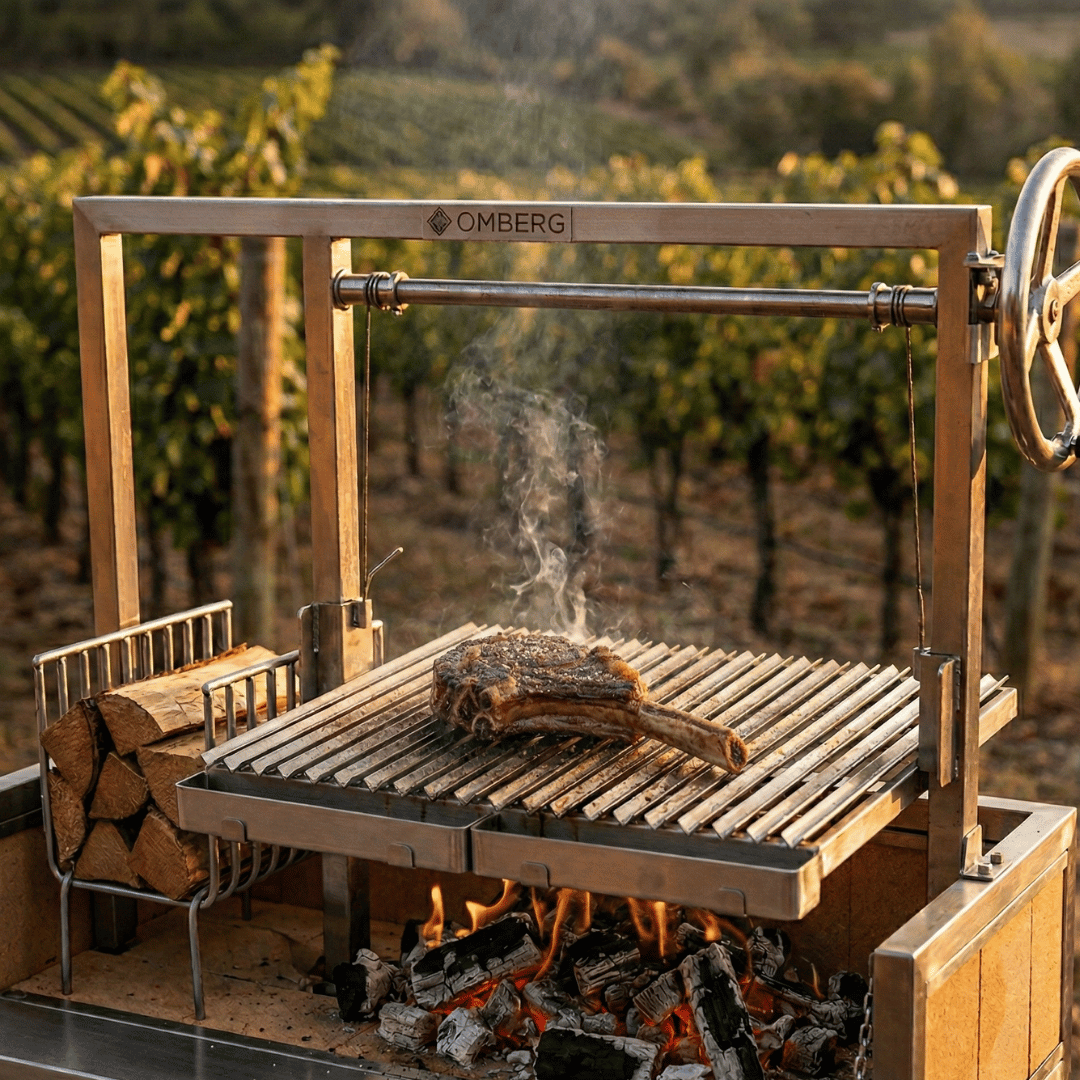
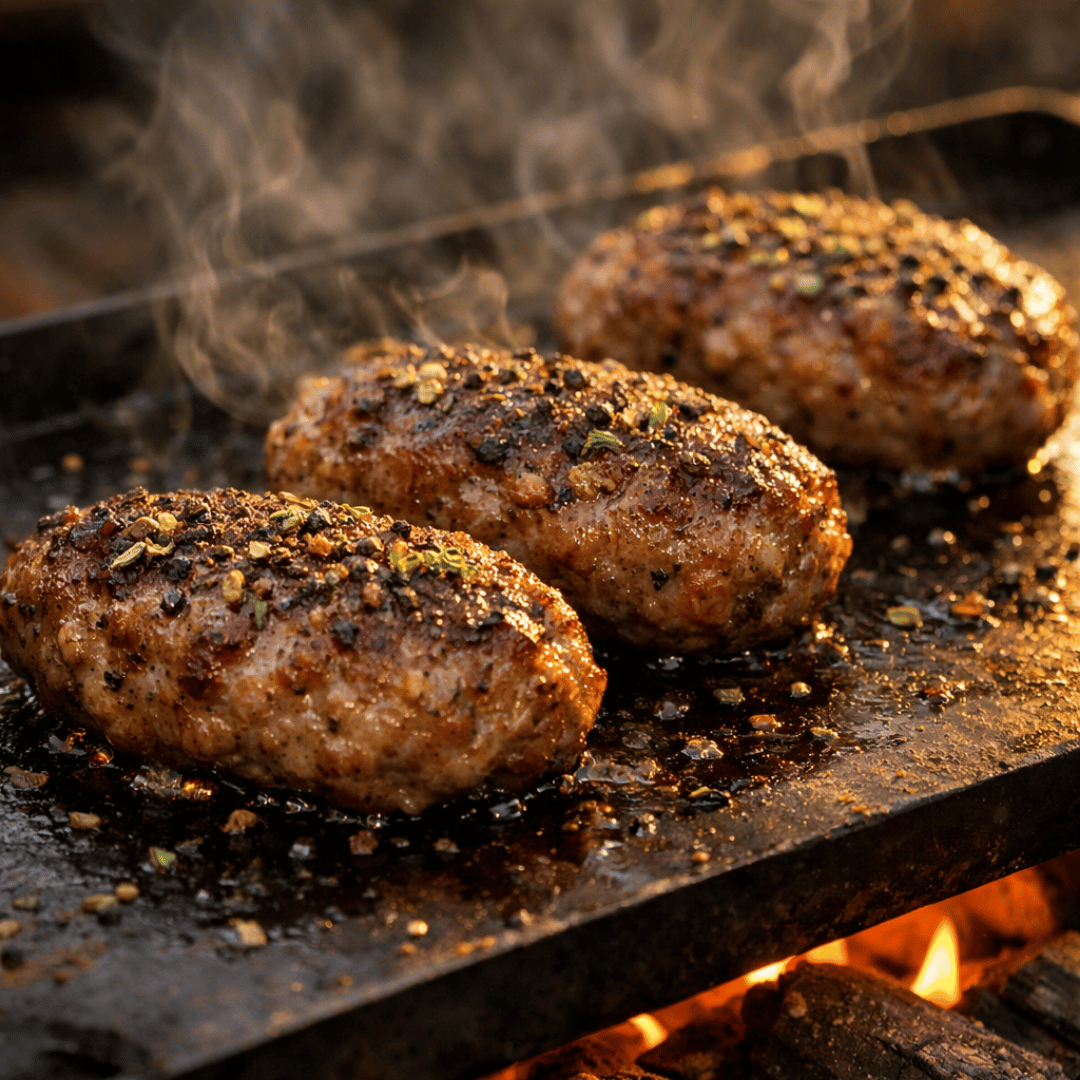
On the Omberg parrilla, cooked on a flat steel surface directly over hardwood coals, kotlety mielone develop a crust that a pan on a hob simply cannot produce. The fat renders into the coal smoke below. The marjoram perfumes the air. The patties hold together over the heat and come off the grill with a bark that the stovetop version never achieves. It is a familiar dish that tastes like something new.

What Makes Kotlety Mielone Different from a Burger
The kotlet mielony is not a burger in the American sense, and it is worth understanding the distinction before cooking.
A classic burger patty is ground beef, loosely formed, seasoned simply, and cooked hot and fast to a pink centre. The kotlet mielony is a mixture of pork and beef — usually weighted toward pork — with breadcrumbs soaked in milk worked through the mixture to keep it moist during the cook. An egg binds everything together. The seasoning is distinctly Polish: dried marjoram, the herb that appears in more traditional Polish recipes than any other, alongside garlic, onion, salt, and pepper.
The result is a patty that is softer in texture than a pure beef burger, moister through the centre, and more complex in flavour. It is also more forgiving on the grill. The breadcrumb and milk binder means the patty holds together over indirect heat without drying out, making it an excellent candidate for an open-fire cook even for those who are cautious about grilling ground meat.
The target internal temperature is 75 degrees Celsius for a pork-containing patty — fully cooked through, with no pink at the centre. At this temperature, done properly over a controlled fire, the kotlet mielony is still juicy throughout.
Ingredients
Serves: 4 to 6 people Prep time: 25 minutes plus 30 minutes rest Cook time: 14 to 18 minutes Difficulty: Easy to Intermediate
For the patties:
- 500 g ground pork, minimum 15 percent fat content
- 300 g ground beef
- 2 slices stale white bread, crusts removed
- 100 ml whole milk
- 1 medium onion, very finely grated
- 3 garlic cloves, finely minced
- 1 egg, beaten
- 2 teaspoons dried marjoram
- 1 teaspoon fine sea salt
- 1 teaspoon freshly cracked black pepper
- 1 tablespoon sunflower oil for brushing
For the fire:
- Good hardwood charcoal or quebracho wood
- Chimney starter or natural firelighters
To serve:
- Polish-style cucumber salad — mizeria — thinly sliced cucumber in sour cream with dill
- Warm boiled or roasted potatoes with butter and dill
- Dark rye bread on the board
- Polish mustard, mild and hot
- Cold Żywiec or Tyskie alongside

Instructions
Step 1: Make the Mixture
Tear the bread into small pieces and place in a bowl. Pour the milk over and leave to soak for 5 minutes until the bread has absorbed all the liquid and become a soft paste. Squeeze out any excess milk with your hands and add the soaked bread to a large mixing bowl.
Add the ground pork, ground beef, grated onion, minced garlic, beaten egg, marjoram, salt, and pepper. Mix with your hands until everything is evenly combined. Do not overwork the mixture — mix until just combined and stop. Overworking ground meat makes the finished patty tough and dense.
Refrigerate the mixture for 30 minutes before shaping. This rest period firms the mixture slightly, making it easier to shape and helping the patties hold together on the grill.
Step 2: Shape the Patties
Divide the mixture into 8 equal portions of approximately 100 g each. Shape each portion into a flat oval patty, about 2 cm thick and slightly larger than the palm of your hand. Kotlety mielone are traditionally oval, not round like a burger. Press the centre of each patty very slightly thinner than the edges — as the patty cooks and the proteins contract, the centre will rise and this compression keeps the finished patty flat rather than domed.
Place the shaped patties on a tray and refrigerate until your fire is ready. Cold patties hold together better on a hot cooking surface than room-temperature ones.
Step 3: Build Your Fire
Start the fire 45 to 55 minutes before cooking. You need a steady medium-high heat — enough to develop a proper crust on the patties without burning the outside before the pork is fully cooked through.
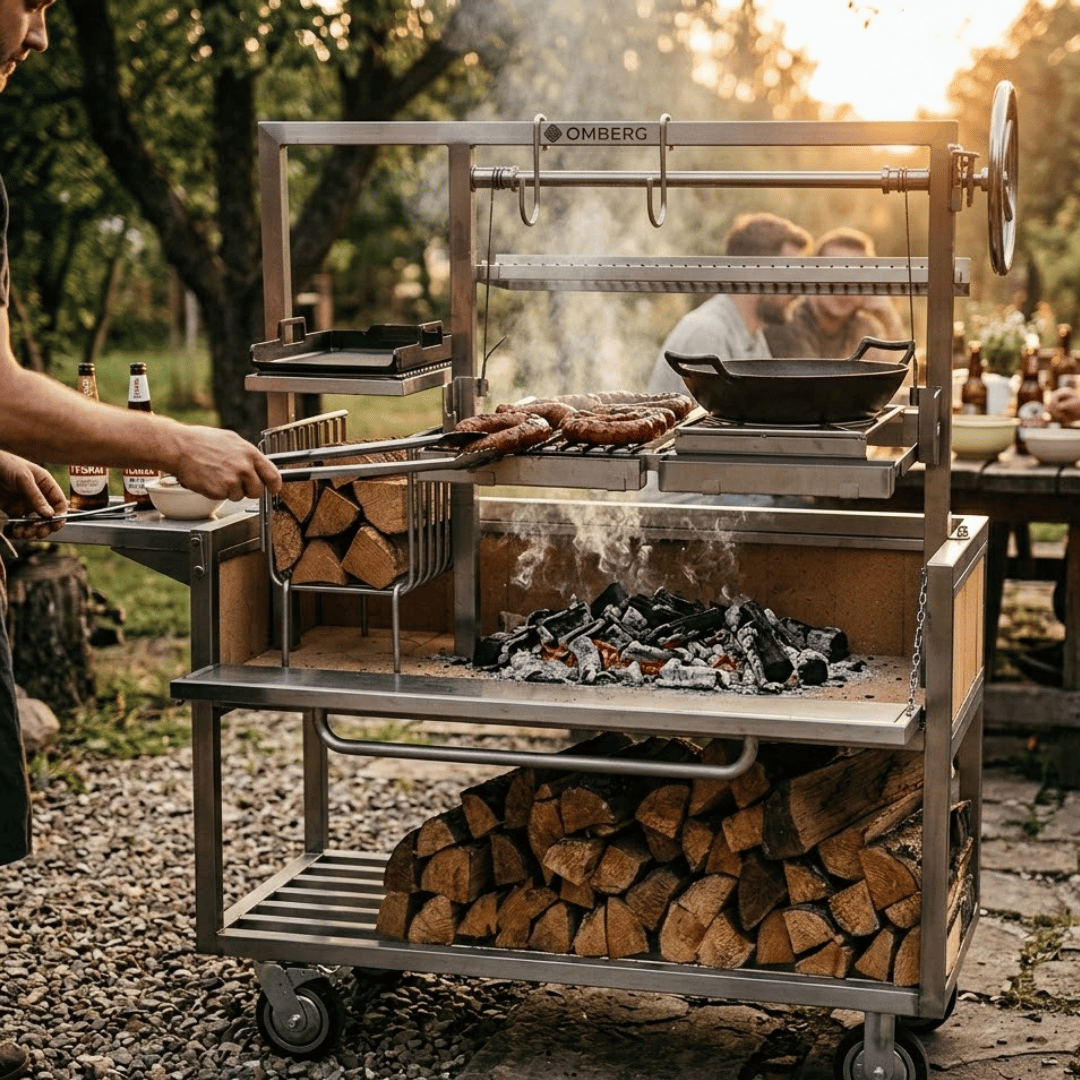
Use a chimney starter with good hardwood charcoal. When the coals are fully lit and grey, pour them evenly across the base of the Omberg Asado Gaucho 1200 and set the grates at mid height.
Place the Carbon Steel Griddle on the grate directly over the coals and allow it to preheat for 8 to 10 minutes before adding the patties. This is important. A cold griddle means the patties steam rather than sear in the first minutes of cooking, and you lose the crust that makes this recipe work.
Target temperature: 200 to 210 degrees Celsius at griddle surface. A drop of water flicked onto the griddle should evaporate immediately on contact.
Step 4: Cook the Patties
Brush the preheated griddle with a thin layer of sunflower oil using the brush from the Omberg BBQ Tool Set. Add the patties — do not crowd them. Work in two batches of four if needed. The patties should sizzle loudly the moment they hit the surface. If they do not, the griddle is not hot enough. Remove them and give it another 2 minutes.
Leave the patties completely undisturbed for 5 to 6 minutes. Resist the urge to move or press them. The crust needs time to set before the patty releases naturally from the surface. If you try to flip too early, the patty will stick and tear. When the patty releases cleanly with a gentle nudge from the spatula in the Omberg BBQ Tool Set, it is ready to flip.
Flip once and cook the second side for another 5 to 6 minutes. The finished patty should be deeply golden on both sides with visible caramelisation around the edges.
Step 5: Check the Temperature
Ground pork must reach an internal temperature of 75 degrees Celsius throughout. This is not optional — it is a food safety requirement for any dish containing ground pork, as confirmed by European food safety guidelines for minced meat.
At 75 degrees internal temperature, a kotlet mielony made with the milk-soaked bread binder described here will still be juicy and soft in the centre. It will not be dry. The breadcrumb binder retains moisture even at full doneness. Trust the temperature, not the colour.
Step 6: Rest and Serve
Remove the patties from the griddle and rest on a wooden board for 4 minutes. Serve directly from the board with mizeria alongside, warm potatoes, rye bread, and mustard. This is a dish that belongs in the middle of the table with everyone reaching across.
Pro Tips for Perfect Kotlety Mielone
Fat content matters more than anything else. Ground pork with less than 15 percent fat produces a dry, crumbly patty on the grill. Ask your butcher for ground pork from the neck or shoulder — the same cut used in Nackensteaks — which carries the right fat content naturally. Do not use lean ground pork or pork loin mince.
The milk-soaked bread is not optional. It is what separates a kotlet mielony from a burger patty. The bread absorbs the milk and keeps the interior moist throughout the cook. Without it, ground pork at 75 degrees internal temperature dries out. With it, the patty stays soft and juicy even fully cooked.
Do not skip the 30-minute refrigerator rest after mixing. A rested mixture is significantly easier to shape and holds together far better on the grill. It is worth building this time into your prep.
Preheat the Carbon Steel Griddle properly. 8 to 10 minutes over the coals before the patties go on. A properly preheated flat surface gives you the crust a grill grate cannot — full contact browning across the entire face of the patty rather than just along the bars.
Make extra. Cold kotlety mielone on dark rye bread with a smear of butter and pickles the next day is one of the better lunches you will have. They keep for 3 days in the refrigerator and reheat well in a pan.
What to Serve With It
Mizeria is the traditional Polish accompaniment and it is the right one for this recipe. Thinly sliced cucumber dressed with sour cream, fresh dill, a pinch of sugar, and a squeeze of lemon. The cold, creamy acidity of mizeria alongside the warm, smoky richness of the grilled patties is a combination that has worked in Polish kitchens for a long time.
Warm potatoes with butter and dill. Boiled or roasted. Dill is as essential to Polish cooking as marjoram. The combination of dill potatoes, mizeria, and grilled kotlety mielone on one table is about as Polish as outdoor cooking gets.
Dark rye bread on the board for tearing and using to wipe the griddle juices. Do not let those juices go to waste.
Grilled spring onions on the edge of the Carbon Steel Griddle alongside the patties in the final 5 minutes of the cook. Char-edged, slightly sweet, and completely at home on this plate.
Chimichurri as a cross-cultural bridge. The parsley, garlic, and vinegar of the Argentine sauce work surprisingly well alongside marjoram-seasoned pork. It is not traditional, but it earns its place at a table where the fire is Argentine and the food is Polish. (See our chimichurri recipe on the Omberg blog)
Beer and Drink Pairings
Polish pilsner, first and correct choice. A cold Żywiec or Okocim alongside grilled kotlety mielone is simply right. The clean, refreshing bitterness cuts through the richness of the pork-beef mixture. These are beers designed to be drunk alongside exactly this kind of food.
Polish craft wheat beer. A well-made Polish pszeniczne — wheat beer — is an excellent and less expected choice. The gentle yeast character and light carbonation of a good craft Polish wheat beer is particularly kind to the marjoram and garlic in the patties. Look for Browar Piwoteka or Szałpiw for craft options with distribution in the Netherlands and Germany.
Dry white wine for those who prefer it. A Grüner Veltliner from Austria is the right wine alongside this dish. The peppery, mineral character of a good Grüner Veltliner — particularly from the Kamptal or Kremstal regions — sits beautifully alongside marjoram-seasoned pork. It is a pairing that most people have not tried and nearly everyone enjoys. Weingut Bründlmayer or Weingut Hirsch are both worth finding.
Non-alcoholic. A cold glass of kefir alongside kotlety mielone is deeply traditional in Polish home cooking and genuinely refreshing alongside grilled meat. It is not a restaurant drink. It is a home drink. Which makes it exactly right for an afternoon around the fire.

The Cultural Story
Kotlet mielony is Polish home cooking at its most honest. It has no pretension. It does not appear in fine dining restaurants. It appears on kitchen tables on weekday evenings, in canteen lunch menus, in the refrigerators of Polish grandmothers who make a large batch on Sunday so there is something good to eat every day of the week.
That simplicity is exactly what makes it interesting on an open fire. Polish cooking culture has always understood that good ingredients prepared with care produce results that no amount of technique can improve upon. The marjoram, the soaked bread, the proper fat content — these are not shortcuts. They are the accumulated wisdom of generations of cooks who have made this dish thousands of times.
What the Omberg parrilla adds is the one thing the stovetop never could: fire. The smoke from the hardwood charcoal, the caramelisation on the Carbon Steel Griddle surface, the smell that brings people out of the house before you have called them for dinner. The kotlet mielony has earned its place outdoors. It just needed the right grill to get there.
The Omberg Asado Gaucho 1200 is that grill. 120 cm of cooking surface. Argentine open-fire engineering. Polish recipes that have been waiting for it.
FAQ
What is the right ratio of pork to beef in kotlety mielone?
The classic ratio is roughly 60 percent pork to 40 percent beef, though many Polish families use pure pork. The pork brings fat and moisture. The beef brings depth and structure. A 50/50 mix also works well and produces a slightly firmer patty that holds together particularly well on the grill. Avoid using very lean beef as it dries out the mixture.
Can I make the mixture the night before?
Yes. The mixture keeps well covered in the refrigerator overnight and the extra resting time actually improves the texture and allows the marjoram to work deeper into the meat. Shape the patties the following day before cooking. This makes kotlety mielone a good recipe for relaxed entertaining — most of the work is done the day before.
Why do my patties fall apart on the grill?
Three possible causes. The mixture was overworked, the bread and milk binder was skipped or underdone, or the griddle surface was not hot enough before the patties went on. Make sure the soaked bread is fully squeezed and evenly worked through the mixture, do not overmix, refrigerate the shaped patties for at least 30 minutes before cooking, and preheat the Carbon Steel Griddle for 8 to 10 minutes before use.
Can I cook kotlety mielone directly on the grill grate?
Not recommended. Ground meat patties with a soft binder fall through grill bars and are difficult to flip cleanly. The Carbon Steel Griddle from Omberg is the right tool for this recipe. It gives full contact browning across the entire patty face, makes flipping clean and controlled, and produces a crust that a grate cannot.
Can I use the Omberg Built-In 1200 for this recipe?
Yes. The Asado Gaucho 1200 Built-In with the Carbon Steel Griddle on top handles this recipe with no adjustments needed. Set the grates at mid height and allow the griddle to preheat for 8 to 10 minutes before adding the patties.
What is mizeria and how do I make it?
Mizeria is a traditional Polish cucumber salad. Peel and thinly slice 2 large cucumbers. Salt lightly and leave for 10 minutes to draw out excess water, then squeeze dry. Dress with 150 ml sour cream, a tablespoon of fresh dill, a small pinch of sugar, and a squeeze of lemon juice. Season with salt and pepper. It should be cold when served alongside the hot patties. Make it before you light the fire and refrigerate until ready to serve.
The Polish Classic That Belongs on Every Asado Table
Simple food made well is always the goal. Kotlety mielone on the Omberg parrilla is exactly that — a dish Polish families have cooked for generations, given the fire and the surface it always deserved.
The Omberg Asado Gaucho 1200 gives you 120 cm of cooking surface, the Carbon Steel Griddle for full contact browning, and the open-fire design that turns a familiar weeknight dish into something genuinely worth gathering around.
Shop the Omberg Asado Gaucho 1200 Browse All Omberg Accessories Explore More Asado Recipes