Whole Ribeye on the Grill: The Cut That Belongs to Every Table
This is not a weeknight cook. This is the one you plan for.
There are cuts of beef that make people stop talking when they come off the grill. The whole ribeye block is one of them.
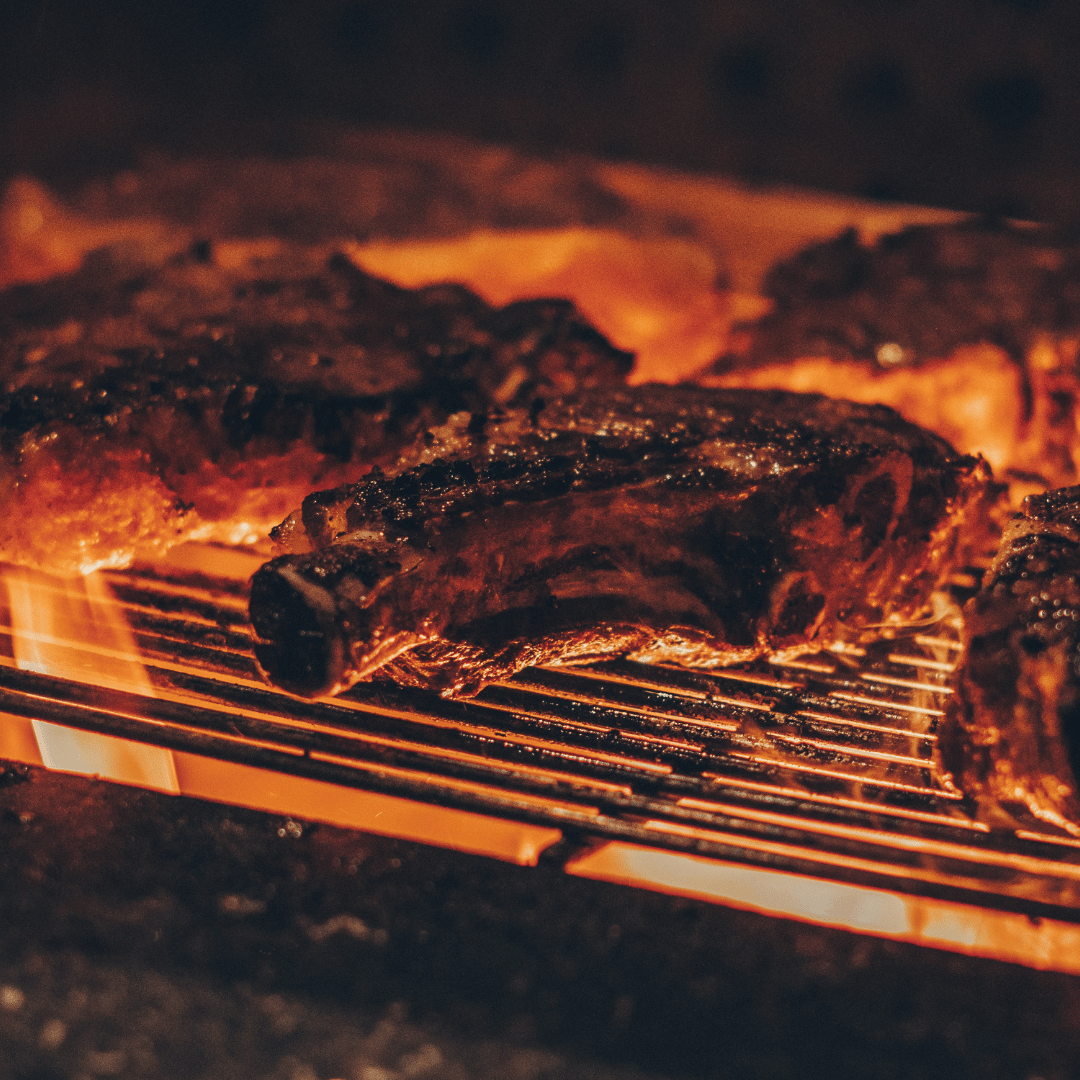
Not individual ribeye steaks. The whole block. A 2.5 to 3.5 kg piece of prime rib, bone-in or boneless, cooked in one piece over an open fire for two to three hours, then rested and sliced thick at the table. The bark on the outside is deep and dark. The inside is pink from edge to edge. The fat cap has rendered into something amber and crackling. It is the most impressive thing most people will have ever seen come off a grill.
In Argentina this cut is called bife ancho. It sits at the front of the rib section, well-marbled and generously fatted, and it is considered one of the great asado cuts precisely because it rewards patience. Rushed, it is merely good. Cooked properly over a slow, steady fire, it becomes the reason everyone stays at the table until the evening turns cold.
This is the central European asado recipe. It does not belong to one country or one culture. It belongs to anyone with a fire, a good cut of beef, and the patience to do it right.

Understanding the Cut
The ribeye comes from the rib section of the cow, between the chuck and the loin. It is one of the most marbled cuts on the animal, which makes it naturally suited to a long, slow cook over open fire. The fat running through the muscle bastes the meat continuously as it renders, keeping every slice moist and flavourful regardless of how long it has been on the grill.
When you buy a whole ribeye block for this recipe, you are looking for a section of 3 to 4 ribs, sometimes called a standing rib roast or prime rib in European butcher shops. Bone-in is preferable. The bones add flavour during the cook and act as a natural heat shield for the meat alongside them, slowing the cook on the bone side and producing a more even result throughout the block.
Weight: 2.5 to 3.5 kg is the sweet spot for this recipe. Large enough to feed 6 to 8 people generously. Small enough to manage on an open fire without losing control of the heat.
In the Netherlands ask for "ribstuk aan het bot" or "côte de boeuf blok." In Germany ask for "Rinderrippe am Knochen." In France ask for "côte de boeuf entière." Every good butcher across all four of your target markets will know exactly what you mean. Order 48 hours in advance.
Ingredients
Serves: 6 to 8 people Prep time: 20 minutes plus overnight dry brine Cook time: 2.5 to 3 hours Difficulty: Intermediate to Advanced
For the beef:
- 1 whole bone-in ribeye block, 2.5 to 3.5 kg
- Coarse sea salt, very generous amount
- Freshly cracked black pepper
- 4 tablespoons olive oil
- 6 garlic cloves, crushed
- Fresh thyme, 6 to 8 sprigs
- Fresh rosemary, 3 to 4 sprigs
For the fire:
- Hardwood charcoal or quebracho wood
- Chimney starter or natural firelighters
To serve:
- Chimichurri (see our chimichurri recipe on the Omberg blog)
- Simple salad with red wine vinegar dressing
- Grilled bread from the edge of the grate
- A glass of something serious (see wine pairings below)

Instructions
Step 1: Dry Brine the Night Before
The night before your cook, take the ribeye block out of its packaging and pat it completely dry with paper towels. Apply a generous, even layer of coarse sea salt on all surfaces including the ends and the bone side. Place uncovered on a rack over a tray and refrigerate overnight.
This is called dry brining. Serious Eats explains the science well: the salt draws moisture to the surface in the first few hours, then the meat reabsorbs it, pulling the salt deep into the muscle. By morning the surface is dry and slightly tacky — exactly what you want. The dry surface browns faster and more evenly on the fire, producing a better bark with less effort.
Do not skip this step. The difference between a dry-brined ribeye and one salted just before cooking is significant and immediately noticeable in the finished crust.
Step 2: Take the Beef Out of the Refrigerator
One hour before you are ready to cook, remove the ribeye block from the refrigerator. A piece of beef this size needs a full hour at room temperature before it goes near a fire. The centre of a 3 kg block will still be cold after 30 minutes. Cold centre plus hot fire equals uneven cooking from outside to inside.
Add the cracked black pepper at this stage. Apply olive oil, crushed garlic, and tuck the thyme and rosemary sprigs against the bone side.
Step 3: Clean the Grate and Build Your Fire
Before lighting, run the V-Shaped Grill Scraper along every bar of the grate. A 3 hour cook on a dirty grate leaves flavours behind that belong to last weekend, not this one. Clean grates also mean better contact and more even colour on the bark.
Start building your fire 60 to 75 minutes before you want to place the beef on the grill. Use a chimney starter with good hardwood charcoal. When fully lit and grey, arrange the coals in a C-shape around the outer edge of your grill base, leaving the centre clear for indirect heat. On the Omberg Asado Gaucho 1200 set the grates at the highest position to start.
Target temperature: 160 to 180 degrees Celsius at grate height.
Step 4: Place Bone Side Down First
Place the ribeye block bone side down on the grate, over the indirect zone. The bones act as a natural trivet, lifting the meat slightly above the grate and slowing the heat reaching the underside of the muscle. This is intentional.
Leave it alone for 60 to 75 minutes. During this time the connective tissue around the bones begins to soften, the fat starts to render slowly, and the cook establishes itself evenly through the block from the bottom up.
Every 30 to 40 minutes check your fire and add a small amount of fresh charcoal to maintain your temperature. On the Omberg Asado Gaucho 1200 the adjustable grate system means if your fire runs slightly hot or cool you can raise or lower the grates to compensate without touching the coals.
Step 5: Rotate and Continue
After 60 to 75 minutes, rotate the block 90 degrees on the grate so the end that was closer to the coals is now facing away. This ensures even cooking across the whole length of the block.
Continue cooking bone side down for another 45 to 60 minutes. By the end of this phase the exterior bone side should show good colour and the fat cap on top should have started rendering visibly.
Step 6: The Meat Hook Option
If you want to take this cook to its natural conclusion, the 4-Pack Meat Hooks for the Asado Gaucho 1200 let you hang the ribeye block vertically above the fire — the traditional al asador method used across Argentina for large cuts.
Hanging means heat and smoke circulate around all sides simultaneously. The fat renders and drips freely downward. The crust develops evenly on every surface, not just the side facing the coals. It is also one of the most visually striking things you can put in front of guests before the meal has even started.
Step 7: The Fat Cap Finish
After approximately 2 hours total bone-side cook time, flip the block fat cap side down. This is the final phase. Use the long-handled tongs from the Omberg BBQ Tool Set for this — a 3 kg block of beef over live coals is not a job for short tools.
Lower your grate one position on the Omberg 1200 to bring the fat cap closer to the heat. Cook fat cap down for 20 to 30 minutes, watching for flare-ups from the rendering fat. If flames rise, move the block briefly to one side and let them die before returning.
Step 8: Temperature Check and Rest
The ribeye block is ready when the internal temperature at the thickest point, away from the bone, reads 57 to 60 degrees Celsius for medium rare — the traditional and recommended temperature for this cut. At this point the fat is rendered, the connective tissue is soft, and the interior is pink and juicy from edge to centre.
Remove from the grill and rest bone side down on a wooden board for 20 to 25 minutes. A piece of beef this size carries significant residual heat and continues cooking internally during the rest. The juices redistribute throughout the block. This rest period is also when you set the table, pour the wine, and let the anticipation build.
Step 9: Slice at the Table
Carve the ribeye block at the table if you can. Stand the block on its bone end and slice downward, removing each rib section first, then slicing the meat across the grain into thick portions of 1.5 to 2 cm each.
Place the bones back on the board alongside the sliced meat. There is more flavour on those bones than most people expect and your guests will want them.

Pro Tips for a Perfect Whole Ribeye
Buy the best beef you can afford. A whole ribeye block is not the place to save money on the ingredient. Ask your butcher for dry-aged beef if available. Even 21 days of dry aging produces a depth of flavour that wet-aged beef cannot match. The quality of the animal, its diet, and how it was aged make a direct and significant difference to the finished result.
The dry brine is the most important step. If you only take one thing from this recipe, let it be the overnight salt. It costs nothing extra and it transforms the result.
Bone in always beats boneless for this cook. The bones add flavour, protect the meat alongside them from drying out, and make the presentation at the table incomparable.
Carve at the table, not in the kitchen. The visual impact of a whole ribeye block resting on a wooden board, steam rising, dark bark glistening, is part of the experience. Bring the board out and carve in front of your guests.
Clean your grate before every long cook. The V-Shaped Grill Scraper does this in under a minute and it makes a real difference to flavour and crust contact across a 3 hour cook.
What to Serve With It
Chimichurri is the only sauce this needs. Nothing else competes with a whole ribeye on the fire the way chimichurri does. The sharpness of the vinegar, the brightness of fresh parsley, the heat of chilli flakes. Make it the day before. (See our chimichurri recipe on the Omberg blog)
Grilled bread on the edge of the grate. Thick slices of crusty bread, cut-side down on the grate for 2 minutes, absorbing the fat drips from the ribeye as it rests beside the fire.
A simple green salad with sharp dressing. Lettuce, cucumber, red onion, olive oil, and a generous pour of red wine vinegar. Clean and sharp, cutting through the richness of the ribeye without competing with it.
Roasted potatoes in the embers. Whole potatoes wrapped in foil with olive oil, garlic, and coarse salt. Placed beside the coals during the final hour of the ribeye cook.
Provoleta on the grate in the last 10 minutes. A thick slice of provolone placed directly on the grate until it bubbles and browns at the edges. Add dried oregano and chilli flakes on top. The Argentine touch that every European table should try at least once.
Wine Pairings Across All Four Markets
For Dutch tables: A Côtes du Rhône Villages from the southern Rhône is a confident and accessible choice. Grenache-based, earthy, with enough body to stand alongside a fat-rich beef cut. For something more special, look for a Châteauneuf-du-Pape from Château Rayas or Clos des Papes.
For German tables: A Württemberg Lemberger (also called Blaufränkisch) is the German answer to a bold ribeye pairing. Deeply coloured, spicy, with dark cherry and pepper notes that work beautifully with charred beef. Look for producers from the Württemberg region.
For all four markets: A Ribera del Duero Reserva from Spain is the continent-wide pick. Ribera del Duero produces some of Spain's most serious Tempranillo — aged in oak, with structure, dark fruit, and a savoury depth that matches the bark and fat of a whole ribeye perfectly. Vega Sicilia Valbuena is the prestige option. Bodegas Alión or Pago de los Capellanes are excellent at a lower price point.
The Argentine option: A Mendoza Malbec from the Uco Valley. Single vineyard if you can find it. Zuccardi Valle de Uco or Achaval Ferrer Finca Mirador. These are serious wines at serious prices that match a serious cook.
Beer for those who prefer it: A Belgian Tripel alongside a whole ribeye is a genuinely outstanding pairing. The high carbonation cuts through the fat with every sip and refreshes the palate between bites. Westmalle Tripel or La Trappe Tripel, both widely available across the Netherlands and Germany.
The Cultural Story
Bife ancho has been cooked over open fires on the Argentine pampas since the gaucho tradition took shape in the 17th and 18th centuries. The gauchos cooked entire animals over slow fires not for ceremony but for practicality — food that could sustain long days of physical work, prepared with minimal equipment, and that rewarded patience over speed.
The ribeye section was prized precisely because its fat content made it the most forgiving cut on the animal. You could leave it over a slow fire longer than anything else without it becoming tough or dry. Time and fat were the two ingredients that a gaucho cook relied on above all others.
That philosophy — cook it slowly, trust the fire, season simply — has not changed in three centuries. It has simply moved from the pampas to gardens across Europe.
The Omberg Asado Gaucho 1200 is built for exactly this kind of cook. 120 cm of cooking surface. Adjustable grates for precise heat management across a 3 hour cook. Open-fire design that lets the smoke work freely. This is a grill built for the cook who takes Sunday seriously.
FAQ
Where do I buy a whole ribeye block in Europe?
Ask your butcher for a bone-in ribeye roast, côte de boeuf entière, or Rinderrippe am Knochen. Order 48 hours in advance for a piece of this size. Online meat suppliers in both the Netherlands and Germany carry bone-in ribeye blocks as well. Dry-aged beef from a specialist butcher will produce a noticeably better result.
How long does it take to cook a whole ribeye on the grill?
Allow 2.5 to 3 hours for a 2.5 to 3.5 kg block at 160 to 180 degrees Celsius. The bone side down phase takes 2 hours. The fat cap finish takes 20 to 30 minutes. Always use a meat thermometer to confirm doneness rather than relying on time alone. Different fires and different sized blocks will vary.
What is the ideal internal temperature for this cut?
57 to 60 degrees Celsius for medium rare is the traditional and recommended temperature for a whole ribeye block. At this temperature the fat is fully rendered, the connective tissue is soft, and the meat is pink and juicy from edge to centre. If your guests prefer medium, aim for 63 to 66 degrees.
Can I use the Omberg Built-In 1200 for this recipe?
Yes. The Asado Gaucho 1200 Built-In handles a whole ribeye block with no adjustments to this recipe. Set the grates at the highest position for the indirect phase and lower one level for the fat cap finish.
Is dry brining really necessary?
Yes. The overnight dry brine is the step that separates a very good whole ribeye from an exceptional one. It takes 5 minutes to apply the night before and costs nothing extra. The salt penetrates the muscle, the surface dries for better browning, and the finished beef is seasoned throughout rather than just on the crust. Do not skip it.
What if I do not have the Meat Hooks for hanging the ribeye?
Flat on the grate, bone side down, following the method above produces an excellent result without the hooks. The meat hooks are an optional upgrade that produces an even more dramatic cook. You can add them to your setup at any time. (See Omberg Accessories)
The Grill That Earns Its Place in Every Garden in Europe
A whole ribeye on the fire is the cook that defines what an asado grill can do. It is the recipe you build a Sunday around. The one your guests talk about on the drive home.
The Omberg Asado Gaucho 1200 gives you 120 cm of cooking surface, height-adjustable grates, and the open-fire design that makes this kind of cook possible in any European garden.