German Pork Neck Steak Recipe: Beer-Marinated, Fire-Grilled
In Germany, a good Märzenbier is not just something you drink beside the fire. It is something you cook with.
The idea of marinating meat in beer before grilling is older than most people realise. German cooks have been doing it for centuries, not because it was fashionable, but because it works. The malt sugars in a dark German beer caramelise on the fire, building a crust that no dry spice rub alone can replicate. The carbonation tenderises the muscle. The yeast adds a depth of flavour that sits quietly underneath the smoke and the char.
Pork neck is the cut this marinade was made for. Thick, well-marbled, and generous with fat, it handles the sweetness of the beer and the sharpness of the mustard without losing its own identity. On an open fire, with proper hardwood charcoal underneath it and time on your side, it becomes one of the best things Germany has ever put on a grill.
This is not Schwenkbraten. That recipe belongs to the Saarland, with its juniper berries and its 72-hour marinade. This is a simpler, faster German pork neck recipe. Different character, different occasion. You can marinate this one the morning of the cook and it will still be exceptional.

Why Pork Neck and Not Pork Chop
The pork neck, called Schweinehals or Nackensteak in German, is the cut that most serious German grillers reach for when they want something beyond a Bratwurst. It is taken from the neck and shoulder area of the pig, where the muscle works hard and develops genuine flavour, and where fat runs generously through the meat in a way that keeps it moist over a hot fire.
A pork chop is leaner, which sounds appealing until you put it over an open flame for 12 minutes. Lean meat and direct fire produce tough, dry results unless the cook is very precise. Pork neck forgives. The fat bastes the meat from inside as it renders, the muscle stays tender even if the heat runs a little hot, and the finished steak has a juiciness and depth that a pork chop simply cannot match.
Ask for Nackensteaks at any German butcher or supermarket. They are one of the most widely available cuts in Germany and the Netherlands. Aim for steaks cut 2 to 3 cm thick. Thinner than 2 cm and they cook too fast for the beer marinade to do its work. Thicker than 3 cm and the outside risks burning before the centre is done.
Ingredients
Serves: 4 to 6 people Prep time: 20 minutes plus 4 to 8 hours marinade Cook time: 12 to 16 minutes Difficulty: Easy
For the pork:
- 4 to 6 pork neck steaks, 2 to 3 cm thick, approximately 200 to 250 g each
For the beer marinade:
- 300 ml dark German beer — a Märzenbier, Dunkel, or Bock
- 3 tablespoons Dijon or German medium mustard
- 3 garlic cloves, crushed
- 1 medium onion, finely grated
- 2 tablespoons olive oil
- 1 tablespoon dark soy sauce
- 1 teaspoon smoked paprika
- 1 teaspoon dried thyme
- 1 teaspoon coarse black pepper
- Half teaspoon coarse sea salt
- 1 tablespoon dark brown sugar or honey
For the fire:
- Good hardwood charcoal or quebracho wood
- Chimney starter or natural firelighters
To serve:
- Warm German potato salad, Kartoffelsalat
- Caramelised onions cooked on the griddle alongside
- Fresh Brötchen or baguette
- Cold beer or Riesling Spätlese (see pairings below)
- Mustard on the side

Instructions
Step 1: Make the Beer Marinade
Combine the dark beer, mustard, crushed garlic, grated onion, olive oil, soy sauce, smoked paprika, thyme, black pepper, salt, and dark brown sugar in a large bowl. Whisk together until the mustard and sugar are fully dissolved into the liquid.
Taste the marinade before adding the pork. It should be slightly salty, slightly sweet, and carry a good depth of flavour from the beer and mustard combination. Adjust seasoning if needed.
Add the pork neck steaks and turn each one to coat thoroughly. Cover tightly with cling film and refrigerate for a minimum of 4 hours. 6 to 8 hours is the sweet spot. Overnight works well too.
One thing worth noting: the sugar in the marinade caramelises quickly on the fire. This is a good thing — it creates the crust. But it also means the heat needs to be managed carefully. Too much direct flame and the crust burns before the pork is cooked through. More on that in Step 4.
Step 2: Prepare the Grill
Take the pork out of the refrigerator 30 minutes before cooking. Let it come toward room temperature while you build the fire.
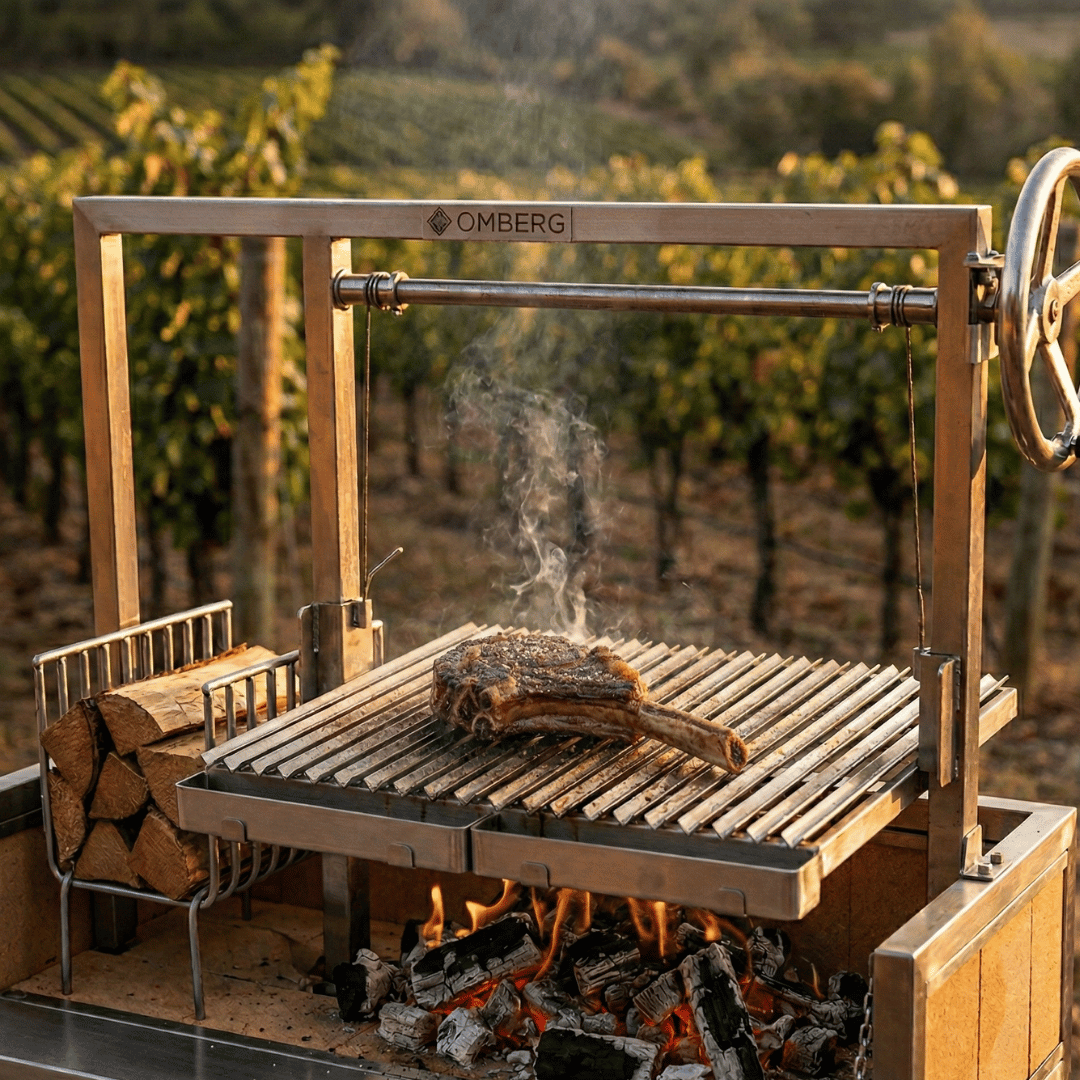
Start your fire 40 to 50 minutes before you want to cook. You need a medium-high, consistent bed of coals — not an enormous fire. Use a chimney starter with good hardwood charcoal. When the coals are fully lit and grey, spread them evenly across the base of the Omberg Asado Gaucho 1200. Set the grates at mid height.
Target temperature: 200 to 220 degrees Celsius. Hold your hand 15 cm above the grate. You should be able to hold it there for 3 to 4 seconds before needing to pull away.
Step 3: Start the Caramelised Onions
Before the pork goes on, place the Carbon Steel Griddle on one side of the Omberg 1200 grate. Add a tablespoon of butter and let it melt over the heat.
Slice 2 large onions into thin rings and add them to the griddle with a pinch of salt. Cook slowly, stirring occasionally, for 15 to 20 minutes until deep golden and completely soft. The onions need to start before the pork so they are ready to serve at the same time. The sweetness and slight char of caramelised onions alongside beer-marinated pork is one of the great simple combinations of German BBQ cooking.
Step 4: Grill the Pork Neck Steaks
Remove the steaks from the marinade. Do not pat them dry. The wet marinade coating is what creates the crust on the fire. Shake off any large pieces of onion from the marinade bowl but leave the thin coating on the meat.
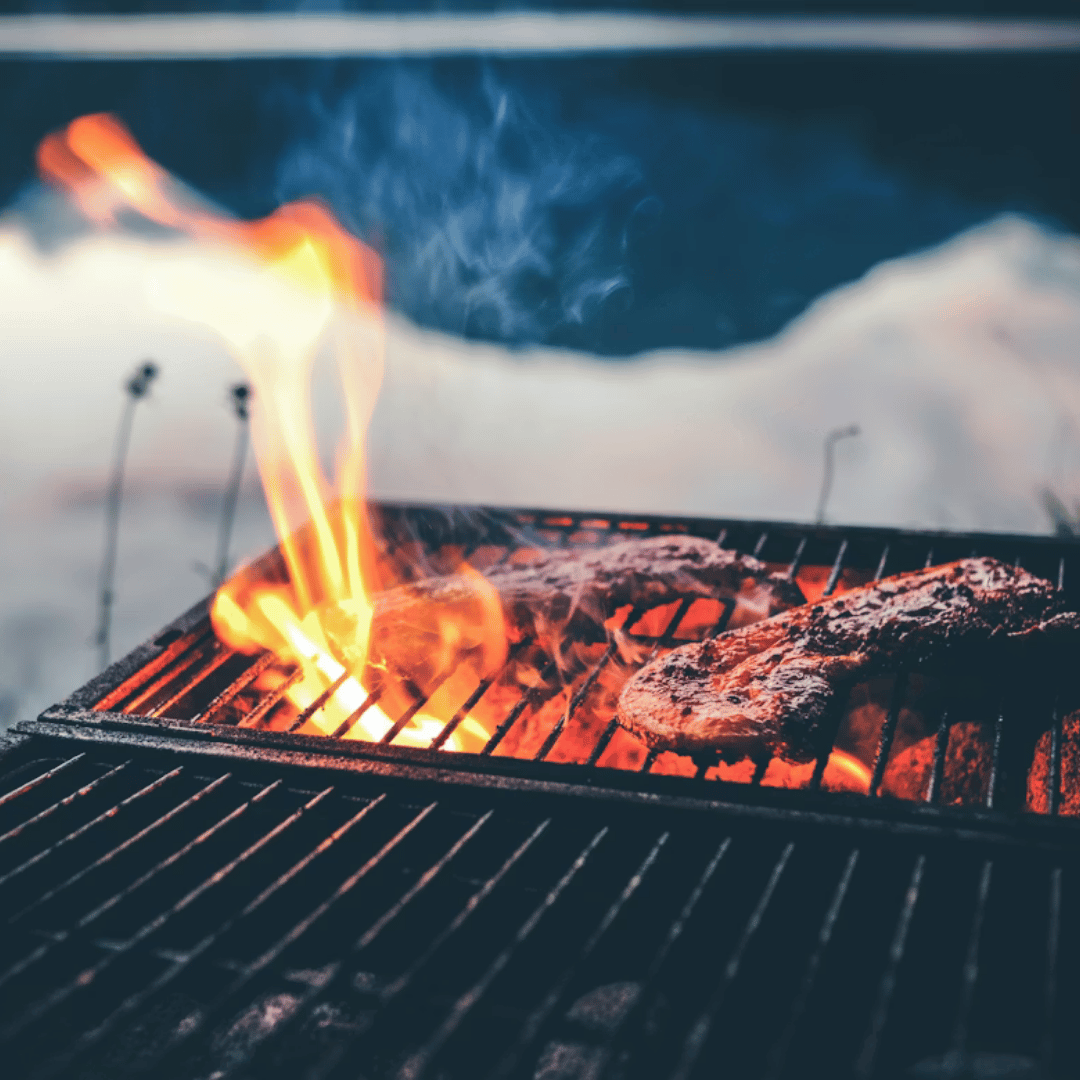
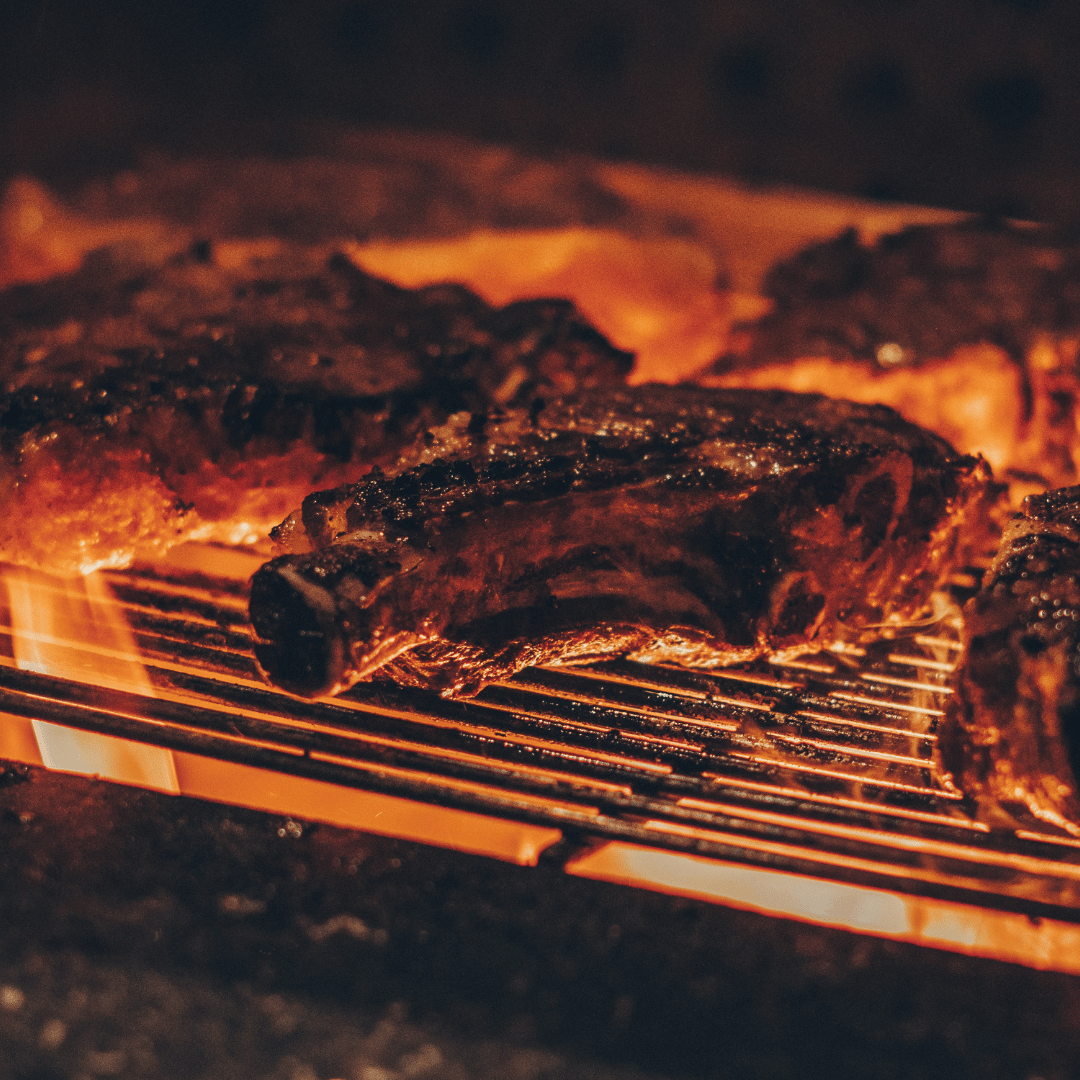
Place the steaks on the hotter side of the grate, away from the griddle. Leave them alone for 4 to 5 minutes. The sugar and beer solids in the marinade need direct heat and time to caramelise without being disturbed — this is the Maillard reaction at work, the same browning chemistry that gives a good bark its depth and complexity.
Watch for the moment the edges of the steak start to show grey cooking colour creeping upward from the bottom. When grey has crept roughly halfway up the side, flip it. This is usually around the 4 to 5 minute mark.
Cook the second side for another 4 to 5 minutes. If the crust is colouring very fast, raise the grate one position on the Omberg Asado Gaucho 1200 to create more distance from the coals.
Use the long-handled tongs from the Omberg BBQ Tool Set for turning. Do not press the steaks with a spatula. Pressing squeezes the juices out and undoes everything the marinade worked to achieve.
Step 5: Check for Doneness
Total cook time for a 2 to 3 cm pork neck steak is 10 to 14 minutes over medium-high heat. The internal temperature should reach 68 to 72 degrees Celsius.
If you do not have a thermometer, cut into the thickest steak at the 12-minute mark. The meat should be just past pink at the very centre with clear juices. Grey all the way through means it has gone too far. Aim to pull it just before you think it is done. Residual heat finishes the work during the rest.
Step 6: Rest and Serve
Remove the steaks from the grill and rest them on a wooden board for 5 minutes. The juices redistribute through the muscle and the interior temperature climbs another 2 to 3 degrees.
Serve with the caramelised onions from the griddle spooned over the top, warm potato salad alongside, and fresh Brötchen on the board. Mustard on the side, always.

Pro Tips for Perfect Nackensteaks
Choose the right beer. The beer you use in the marinade matters. A Märzenbier or Dunkel from a German brewery gives the best flavour result. The malt depth and slight sweetness of these darker styles translates into a better crust on the fire than a light pilsner would. Bitburger Märzen, Paulaner Dunkel, or Ayinger Oktober Fest-Märzen are all excellent choices. Use a beer you would enjoy drinking.
Do not rush the marinade. 4 hours is the practical minimum. 8 hours is where the beer marinade really starts to show what it can do. The carbonation slowly works on the surface fibres of the pork neck, and the malt sugars penetrate deeper into the muscle over time. If you have the evening before, marinade overnight.
Watch the sugar. The brown sugar and beer solids in the marinade make this cut more susceptible to burning than a plain-seasoned steak. Monitor the grate heat carefully and use the height adjustment on the Omberg 1200 to pull back if the crust is developing faster than the inside is cooking.
The caramelised onions on the griddle are not optional. They take 15 minutes and they belong on this plate. The Carbon Steel Griddle handles onions perfectly on one side of the grate while the pork cooks on the other. The wide surface of the 1200 means both run simultaneously without any compromise on heat.
Do not serve this without mustard. German grilled pork and good mustard are a combination that does not need improving. Düsseldorfer Senf for something sharper. Bavarian sweet mustard for something rounder. Both belong on the table.
What to Serve With It
Warm German potato salad is the traditional and correct side dish. The Swabian style — potatoes dressed warm with broth, vinegar, and a good mustard — works perfectly alongside the sweet and smoky beer crust of the pork neck.
Caramelised onions from the griddle go directly on top of the steaks when serving. Make extra. Everyone always wants more.
Fresh Brötchen for the table. Tear and use to wipe the board. This is the part of a German BBQ that nobody talks about and everybody remembers.
Grilled corn on the Omberg 1200 in the final 20 minutes of the cook. Husks on, directly on the grate, turning every 5 minutes. The smoky, slightly charred corn alongside beer-marinated pork is a combination that works across cultures and across tables.
Chimichurri as an optional cross-cultural touch. The bright, sharp herb sauce cuts through the richness of the beer marinade crust in a way that works surprisingly well. It is not traditional German BBQ. But neither is cooking on a parrilla, and both are better for the combination. (See our chimichurri recipe on the Omberg blog)
Wine and Beer Pairings
Beer, first choice and culturally correct: A cold Märzenbier or Bock alongside beer-marinated pork neck is simply right. The same beer family used in the marinade works beautifully in the glass alongside the finished dish. Paulaner Märzen, Spaten Oktoberfest, or Ayinger Bräuweisse are all excellent and widely available in both Germany and the Netherlands.
Beer, interesting option: A German Kellerbier — unfiltered and served slightly hazy — is a genuinely good pairing for grilled pork. The slight yeast character and the earthy, unpolished quality of a good Kellerbier from a Franconian brewery echoes the complexity of the beer marinade in the meat.
Riesling, white wine choice: A dry Riesling Spätlese from the Pfalz region alongside beer-marinated pork neck is excellent for guests who prefer wine. The Pfalz produces some of Germany's most food-friendly Rieslings — mineral acidity and stone fruit notes that cut cleanly through the fat of the neck and cleanse the palate between bites. Dr Bürklin-Wolf or Reichsrat von Buhl are both worth finding.
Spätburgunder, red wine choice: A Baden or Pfalz Spätburgunder (German Pinot Noir) for guests who want a red. Light to medium-bodied, with red cherry and earthy notes that work alongside grilled pork without overpowering it. Weingut Huber from Baden or Weingut Dr Heger from the Kaiserstuhl area are both worth seeking out.
The Cultural Story
Germany's relationship with the fire and the pig is one of the oldest in European cooking. The combination of smoked, cured, and grilled pork runs through German food culture from the Rhineland to Bavaria, from the North Sea coast to the Alps.
What makes this recipe interesting is the way it connects two traditions that share the same roots. The beer marinade is a German technique. The open-fire cook on an adjustable-grate parrilla is a South American one. Both come from the same underlying philosophy: good meat, simple seasoning, proper fire, and the patience to let the result happen without forcing it.
The Omberg Asado Gaucho 1200 sits comfortably in both traditions. It was designed for Argentine asado cuts. It handles German Nackensteaks with the same precision. The adjustable grates, the 120 cm cooking surface, and the open-fire design give German recipes the same elevated treatment that Argentine cuts have always received.
That is the point of Omberg in the European market. Not to replace what people already love about their own grilling culture. To give them a grill that does it better than anything they have used before.
FAQ
What beer works best in a pork neck marinade?
A dark German beer with good malt character produces the best result. Märzenbier, Dunkel, or Bock styles all work well. The malt sugars caramelise on the fire and the depth of flavour transfers into the crust. Avoid very bitter IPAs or hop-forward beers as the bitterness amplifies during cooking and can overpower the pork. Use a beer you enjoy drinking.
How long should I marinate the pork neck in beer?
4 hours is the practical minimum. 6 to 8 hours gives a noticeably better result, with the beer tenderising the muscle and the flavours penetrating deeper. Overnight marinating is excellent if your schedule allows. Do not exceed 24 hours with a beer and mustard marinade as the acidity can begin to affect the texture of the meat surface.
Why does my marinade crust burn before the pork is cooked through?
The sugar in the marinade caramelises quickly over high heat. If the crust is burning before the interior is done, your fire is too hot or your grates are set too low. Raise the grates one position on the Omberg 1200 to increase the distance from the coals, or spread the coals slightly thinner to reduce the heat. Medium rather than high fire is the right temperature for a sugar-bearing marinade.
Can I use this marinade on other cuts?
Yes. This beer marinade works well on pork shoulder steaks, thick chicken thighs, and even beef skirt steak. Each cut will behave slightly differently on the fire in terms of cook time and temperature, but the marinade itself is versatile. For beef, reduce the marinating time to 4 to 6 hours as beef muscle is denser than pork.
Can I use the Omberg Built-In 1200 for this recipe?
Yes. The Asado Gaucho 1200 Built-In is ideal for this recipe. Set the grates at mid height for the cook. Use the Carbon Steel Griddle on one side for the caramelised onions and the main grate surface for the pork steaks running simultaneously.
What is the difference between this recipe and Schwenkbraten?
Schwenkbraten uses juniper berries, a longer marinade of 24 to 72 hours, and is traditionally cooked on a swinging grill suspended over a wood fire. It comes from the Saarland and has a very specific regional identity. This recipe is broader and faster. Beer and mustard replace juniper as the key marinade flavours. The cook is shorter and more accessible. Both use pork neck but they are genuinely different dishes with different flavour profiles.
The Right Grill for a Serious German BBQ
Beer-marinated pork neck on an open fire is a simple recipe done well. The Omberg Asado Gaucho 1200 gives you the cooking surface to run 6 steaks plus caramelised onions simultaneously, the height-adjustable grates to manage the sugar-bearing marinade without burning, and the open-fire design that turns a good recipe into a great one.
120 cm of cooking surface. Argentine asado engineering. Built for the German garden.
Shop the Omberg Asado Gaucho 1200 Browse All Omberg Accessories Explore More Asado Recipes