Côtes de bœuf au barbecue : feu doux, cuisson longue, résultat exceptionnel
Certains cuisiniers misent sur la rapidité. Celui-ci, lui, mise sur la patience.
Il y a un moment, vers la deuxième heure de cuisson d’une côte de bœuf à feu doux, où l’odeur change. La note crue et sanglante a disparu. Ce qui revient du barbecue est plus sombre et plus intense. De la fumée, de la graisse fondue, une croûte caramélisée. C’est l’odeur d’une cuisson menée avec patience et respect.
Les côtes de bœuf préparées de cette manière ne sont pas un simple dîner de semaine. C'est un moment de fête. Une bonne raison d'allumer le feu tôt, de se servir une boisson fraîche et de laisser l'après-midi se dérouler autour du barbecue.
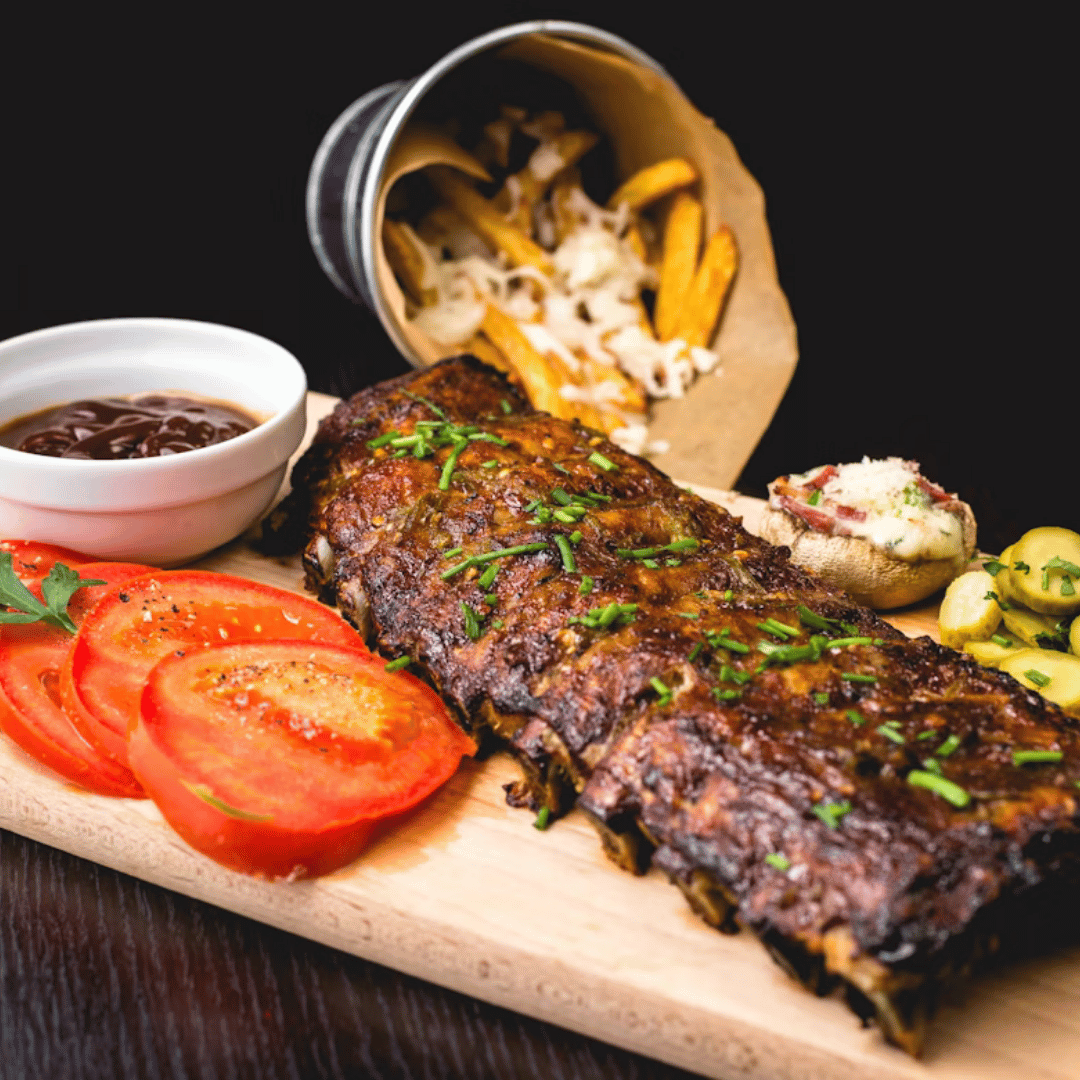
Cette recette applique la méthode de l'asado argentin à la cuisson des côtes de bœuf. Une cuisson à feu doux et patiente, une croûte de sel bien lisse, et un barbecue suffisamment large pour accueillir un rack entier sans compromis. Le résultat : des côtes à la croûte sombre et intense à l'extérieur, et une viande si tendre qu'elle se détache facilement de l'os.

Comprendre la coupe
Les côtes de bœuf se présentent sous deux formes principales. Les côtes dorsales se situent le long de la partie supérieure de la cage thoracique, près de la colonne vertébrale. Les côtes courtes proviennent de la partie inférieure de la côte et contiennent davantage de viande, de graisse et de saveur.
Pour cette recette, optez si possible pour des côtes courtes. Un carré de côtes courtes entier, également appelé « beef plate ribs », est la pièce la plus impressionnante que vous puissiez mettre sur un barbecue. Chaque os est gros, la viande est épaisse et la teneur en graisse permet une cuisson « auto-arrosée » tout au long de la cuisson.
Aux Pays-Bas et en Allemagne, demandez à votre boucher des « runder ribben » ou des « Rinderrippen ». La plupart des bons bouchers en proposent, mais vous devrez peut-être commander un carré entier à l'avance. Un carré entier de trois os pèse généralement entre 2 et 2,5 kg. C'est ce que vous allez cuisiner.
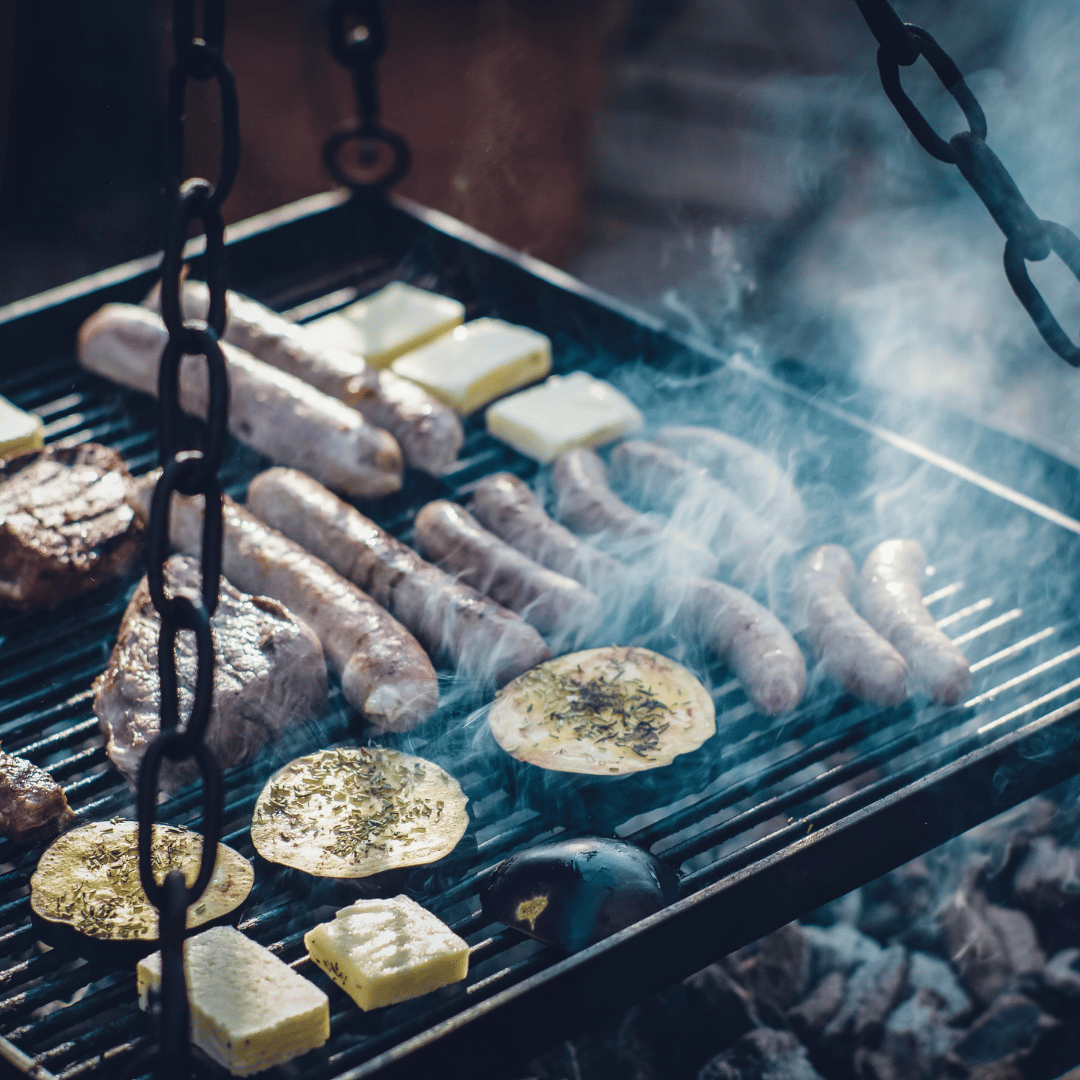
Le Gaucho 1200 d'Omberg Asado dispose d'une surface de cuisson de 120 cm, ce qui signifie qu'une grille entière de côtes de bœuf tient à plat, tout en laissant de la place pour les accompagnements à côté. Ce n'est pas un barbecue qui vous oblige à vous adapter. C'est lui qui s'adapte à vous.
Ingrédients
Pour : 4 à 6 personnes Temps de préparation : 15 minutes Temps de cuisson : 3 à 3,5 heures Niveau de difficulté : intermédiaire
Pour les côtes :
- 1 rack entier de côtes courtes de bœuf, soit environ 2 à 2,5 kg
- Sel de mer gros, en quantité généreuse
- Poivre noir fraîchement moulu
- 1 cuillère à café de paprika fumé (facultatif, pour donner plus de profondeur à la croûte)
- 1 cuillère à soupe d'huile d'olive
Pour le feu :
- Du charbon de bois de qualité issu de bois dur ou de quebracho
- Allume-feu pour cheminée ou allume-feu naturels
Pour servir :
- Chimichurri (recette sur le blog d'Omberg)
- Du pain croustillant, réchauffé près du barbecue
- Salade verte toute simple avec une vinaigrette au vinaigre de vin rouge
- Un verre d'un bon vin (voir les suggestions ci-dessous)
Instructions
Étape 1 : Préparer le support
Sortez les côtes du réfrigérateur 45 minutes avant la cuisson. Si vous mettez de la viande froide directement sur un gril chaud, la cuisson ne sera pas homogène, de l'intérieur vers l'extérieur. La viande doit d'abord être à température ambiante.
Vérifiez si le côté osseux du carré de côtes présente une fine membrane, appelée « peau argentée ». Glissez un couteau sous le bord à l'une des extrémités, saisissez-la à l'aide d'un morceau de papier essuie-tout pour mieux la tenir, puis retirez-la d'un seul geste. En retirant cette membrane, vous permettez à la chaleur et à la fumée d'atteindre correctement le côté osseux et vous rendez les côtes plus faciles à manger une fois cuites.
Séchez les côtes en les tapotant avec du papier absorbant. Badigeonnez-les légèrement d'huile d'olive, puis saupoudrez-les généreusement de gros sel et de poivre noir de tous les côtés. Si vous utilisez du paprika fumé, ajoutez-le à ce moment-là. Faites pénétrer les épices en appuyant légèrement avec les mains. Réservez.

Étape 2 : Allumez votre feu
Allumez votre feu 60 à 75 minutes avant de mettre la viande sur le barbecue. Il ne s'agit pas d'une cuisson à chaleur rapide. Vous avez besoin d'un lit de braises stable et homogène, et non d'un feu qui rugit.
Utilisez un allume-barbecue. Remplissez-le de charbon de bois de feuillus de bonne qualité et allumez-le par le fond à l'aide d'un allume-feu naturel. Lorsque les braises sont bien allumées et que leur surface est grise, versez-les au fond de votre barbecue et répartissez-les uniformément.
Température cible au niveau de la grille : entre 120 et 150 degrés Celsius. C'est une température basse. Elle est volontairement basse. Placez votre main à 15 cm au-dessus de la grille. Vous devriez pouvoir la maintenir à cette hauteur pendant 7 à 8 secondes. Si vous devez la retirer plus rapidement, attendez que les braises se stabilisent davantage avant d'y déposer votre viande.
Sur le Gaucho 1200 d’Omberg Asado , réglez d’abord vos grilles à la position la plus haute. Cela permet de créer la distance par rapport aux braises nécessaire à une cuisson longue et lente. Vous pourrez les abaisser par la suite si vous avez besoin de plus de chaleur pour la phase finale.
Étape 3 : La cuisson longue
Placez le carré de côtes, côté os vers le bas, sur la grille. Les os font office de bouclier thermique naturel pour la viande qui se trouve au-dessus, la protégeant ainsi de la chaleur directe et permettant une cuisson lente et homogène.
Fermez toutes les ouvertures d'aération de votre barbecue afin de réduire le débit d'air et de maintenir une température constante. Sur le modèle Omberg 1200, la conception ouverte favorise une convection naturelle sans retenir trop de chaleur. Surveillez les braises toutes les 30 à 40 minutes et ajoutez une petite quantité de charbon de bois frais si nécessaire pour maintenir la température.
Faites cuire le côté os en bas pendant 2 heures sans le retourner.

Étape 4 : Le développement du « flip » et du « bark »
Au bout de 2 heures, retournez la grille de manière à ce que le côté de la viande soit désormais tourné vers les braises. C'est à ce moment-là que se forme la « croûte ». La croûte composée de graisse fondue, de sel et de poivre entre en contact avec la chaleur directe et caramélise, donnant à l'extérieur cette couleur foncée et intense qui fait tout le charme des côtes de bœuf.
Faites cuire la viande, côté viande vers le bas, pendant 45 minutes à 1 heure. Surveillez les flammes provoquées par les gouttes de graisse. Si des flammes apparaissent, déplacez brièvement la grille sur le côté, laissez la flamme s'éteindre, puis remettez-la en place.
Étape 5 : Vérification de la température
Les côtes sont cuites lorsque la température interne de la partie la plus épaisse de la viande atteint entre 93 et 96 degrés Celsius. À cette température, le tissu conjonctif s'est complètement désagrégé et la viande se détache de l'os presque sans résistance.
Si vous n'avez pas de thermomètre, utilisez la méthode de la sonde. Enfoncez une brochette ou un cure-dent dans la partie la plus épaisse de la viande, entre les os. Elle doit s'enfoncer et ressortir sans aucune résistance, comme si vous enfonciez un objet dans du beurre fondu.
Étape 6 : Repos
Retirez la grille du barbecue et posez-la, côté os vers le bas, sur une planche en bois. Couvrez-la légèrement de papier d'aluminium sans serrer et laissez reposer pendant 15 à 20 minutes. Ne sautez pas cette étape.
Les côtes de bœuf de cette taille conservent beaucoup de chaleur. Le temps de repos permet à la viande de se stabiliser et au jus de se répartir uniformément dans la chair.
Étape 7 : Trancher et servir
À l'aide d'un couteau bien aiguisé, coupez entre chaque os afin que chaque convive dispose de sa propre côte. La viande doit offrir une légère résistance lorsque vous la coupez, sans pour autant nécessiter beaucoup de force. Servez immédiatement en nappant d'chimichurri s et en accompagnant de pain.

Les conseils de pros pour des côtes de bœuf parfaites
Choisissez la bonne pièce de viande. Optez pour les côtes courtes. Les côtes dorsales contiennent moins de viande entre les os et se dessèchent plus vite. Si votre supermarché habituel ne vend pas de côtes courtes, vous en trouverez chez un boucher. Cela vaut la peine de faire un petit détour.
La cuisson à basse température et à feu doux est incontournable. Les côtes de bœuf cuites à haute température deviennent dures et difficiles à mâcher. La graisse et le collagène ont besoin de temps pour se décomposer. Trois heures à 130 degrés donnent systématiquement de meilleurs résultats que 90 minutes à 200 degrés.
Ne mettez pas le couvercle. L'asado argentin est une méthode de cuisson au feu ouvert. Le Gaucho 1200 d'Omberg Asado est conçu pour la cuisson à l'air libre, ce qui signifie que vous réglez la chaleur en ajustant la disposition du charbon et la hauteur de la grille, plutôt qu'en la confinant sous un couvercle. Cela confère à la viande un arôme de fumée plus pur et une croûte plus savoureuse.
Le grattoir à grille en forme de V a toute sa place ici. Après trois heures de cuisson de côtes de bœuf, les grilles sont recouvertes d’une importante quantité de graisse fondue et de résidus de croûte. Un rapide coup de grattoir pendant que les grilles sont encore chaudes permet de garder l’acier propre et prêt pour votre prochaine cuisson.
Si possible, salez la viande la veille. Le « saumurage à sec », qui consiste à saupoudrer le sel 12 à 24 heures avant la cuisson et à laisser la pièce à découvert au réfrigérateur, permet d'attirer l'humidité vers la surface, puis de la réabsorber plus profondément dans la viande. On obtient ainsi un morceau de bœuf mieux assaisonné et plus savoureux, de l'intérieur vers l'extérieur.
Les meilleurs morceaux à ajouter à un asado complet
Les côtes de bœuf constituent le plat principal, pas un menu complet. Si vous cuisinez pour un groupe, pensez à ajouter ces morceaux pour compléter le repas :
Le chorizo criollo est le premier à passer sur le gril. Il cuit en 15 à 20 minutes et permet aux convives de grignoter un peu pendant que les côtes sont encore sur le feu. À servir avec du pain croustillant.
Vacío (le bifteck de flanc) est l'autre grand classique argentin. Sa cuisson dure environ 2 à 3 heures ; vous pouvez donc le mettre sur le feu en même temps que les côtes, afin que les deux soient prêts en même temps. (Consultez notre recette « vacío »)
La « provoleta » est une épaisse tranche de provolone affiné que l'on dépose directement sur la grille jusqu'à ce qu'elle bouillonne et que ses bords dorent. Elle fond d'une manière unique et cela prend environ 8 minutes. Saupoudrez-la d'origan séché et de flocons de piment avant de servir.
Avec quoi l'accompagner
Chimichurri C'est l'accompagnement idéal pour les côtes de bœuf. Son acidité et ses notes d'herbes fraîches viennent parfaitement contrebalancer la richesse et le gras de la viande. Préparez-la la veille pour un résultat optimal. (Découvrez notre recette de « chimichurri » sur le blog Omberg)
Le maïs grillé au beurre et au gros sel, cuit dans sa feuille directement sur la grille pendant 20 minutes, accompagne à merveille les côtes de bœuf et trouve particulièrement bien sa place sur les tables néerlandaises et allemandes.
Les « patatas a la parrilla » sont des pommes de terre enveloppées dans du papier d'aluminium avec de l'huile d'olive, de l'ail et du romarin, que l'on place près des braises pendant les 45 dernières minutes de la cuisson des côtes. Elles sont ainsi tendres à l'intérieur et imprégnées d'un goût fumé.
Une simple salade de tomates et d'oignons assaisonnée d'huile d'olive et de vinaigre de vin rouge. Une saveur pure et vive, qui accompagne à merveille un plat aussi riche que des côtes de bœuf.

Accords mets-vins et boissons
Les côtes de bœuf sont riches, grasses et ont un goût profondément fumé. Il faut un vin qui ait suffisamment de corps et de structure pour tenir la route face à elles, et non un vin qui se perde derrière le plat.
Vin rouge, accord classique : un Malbec argentin de Mendoza s'impose naturellement. Ses arômes de fruits noirs, ses tanins fermes et sa finale terreuse s'accordent parfaitement avec le goût de charbon et les notes fumées des côtes. Optez pour un Zuccardi Valle de Uco ou un Norton Reserva si vous recherchez un vin qui ne coûte pas une fortune mais qui offre une qualité bien supérieure à son prix.
Vin rouge, accord européen : un Spätburgunder (Pinot Noir) allemand de Bade ou de la région du Palatinat constitue un excellent choix pour les tables néerlandaises et allemandes. Les notes terreuses et de fruits rouges d’un bon Spätburgunder font ressortir la saveur du bœuf sans entrer en concurrence avec le goût fumé. Le domaine Weingut Meyer-Näkel, situé dans la vallée de l’Ahr, en propose un exemple remarquable. Cet accord est trop peu utilisé et ne manquera pas d’impressionner tous les convives.
Vin rouge, un choix plus corsé : un Tempranillo espagnol de la Ribera del Duero vous offre la structure et la puissance nécessaires pour accompagner un plat de bœuf copieux. Largement disponible aux Pays-Bas et en Allemagne, c'est un excellent rapport qualité-prix pour un repas entre un grand groupe.
Bière : Pour les tables néerlandaises et allemandes, une Bock brune bien fraîche ou une Dubbel belge accompagnent à merveille les côtes de bœuf. La profondeur maltée et la légère douceur de ces deux styles équilibrent parfaitement le sel et le gras de la croûte des côtes. Avis aux lecteurs allemands : une Märzenbier est idéale dans ce cas pendant les mois les plus froids.
Sans alcool : une eau pétillante agrémentée d'un généreux filet de citron et de menthe fraîche. Simple, bien fraîche et rafraîchissante entre deux bouchées d'un plat aussi riche.
L'histoire culturelle derrière le cuisinier
En Argentine, la manière dont vous préparez une côte de porc au feu en dit long sur vos talents de cuisinier. Se précipiter est considéré comme un manque de respect envers la viande et les convives qui attendent. Le rôle de l’ asador, c’est-à-dire la personne chargée de surveiller le feu et la cuisson, revêt une véritable importance sociale dans la culture argentine. Un bon « asador » est patient, attentif et sûr de lui.
C'est de la tradition des gauchos de la pampa que découle cette philosophie. Ces éleveurs de bétail cuisinaient au feu de bois, non pas parce que c'était à la mode, mais parce que c'était pratique et que cela donnait des résultats qu'aucune autre méthode ne pouvait égaler.
Le Gaucho 1200 d'Omberg Asado a été conçu dans le respect de cette tradition. Sa surface de cuisson de 120 cm vous offre suffisamment d'espace pour gérer plusieurs morceaux de viande à différents stades de cuisson. Les grilles réglables vous permettent de contrôler la chaleur avec précision sans avoir à lutter contre les flammes. La conception en V des grilles évacue efficacement la graisse, réduisant ainsi les flambées lors d'une cuisson prolongée.
Ce n'est pas un barbecue que l'on remplace par un autre. C'est celui que l'on garde.
Découvrez le modèle Gaucho 1200 d'Omberg Asado
Foire aux questions
Où puis-je acheter des côtes de bœuf aux Pays-Bas ou en Allemagne ?
La plupart des grands supermarchés proposent des côtes de dos, mais pas de côtes de flanc. Le mieux est de vous rendre chez un boucher spécialisé, chez un bon fournisseur de viande en ligne ou chez un boucher halal, qui proposent souvent des morceaux de bœuf plus volumineux, notamment des côtes de flanc. Pensez à commander à l'avance pour avoir le meilleur choix.
Comment savoir si mon feu est à la bonne température pour cette cuisson ?
Placez votre main à 15 cm au-dessus de la grille. À la bonne température pour une cuisson lente des côtes de bœuf (entre 120 et 150 degrés Celsius), vous devriez pouvoir la maintenir à cette hauteur pendant 7 à 8 secondes. Si vous devez la retirer plus tôt, attendez que les braises refroidissent légèrement avant d'y déposer votre viande.
Puis-je utiliser le gril encastrable Omberg pour cette recette ?
Oui. Le modèle « Asado Gaucho 1200 Built-In » convient parfaitement à cette recette et offre la même surface de cuisson de 120 cm. Placez vos grilles dans la position la plus haute pour la phase de cuisson lente, puis abaissez-les légèrement pour la formation finale de la croûte.
Faut-il faire mariner les côtes de bœuf avant de les cuire ?
Aucune marinade n'est nécessaire. La philosophie de l'asado argentin prône un assaisonnement simple. Du sel, du poivre et un bon feu suffisent. Une marinade trop élaborée peut en effet masquer la saveur naturelle d'un morceau de bœuf de grande qualité. Laissez la viande s'exprimer.
Et si mes côtes n'étaient pas tendres au bout de 3 heures ?
Continuez la cuisson. Certaines pièces, notamment les morceaux plus épais ou ceux provenant d'animaux plus âgés, peuvent nécessiter jusqu'à 4 heures pour que les tissus conjonctifs soient complètement attendris. Vérifiez la température à l'aide d'une sonde toutes les 20 minutes à partir de la troisième heure. Lorsque la brochette s'enfonce comme dans du beurre, la cuisson est terminée.
Comment nettoyer les grilles Omberg après avoir cuit des côtes de bœuf ?
Utilisez le grattoir à barbecue en forme de V lorsque les grilles sont encore tièdes, et non brûlantes. Sa forme en V s'adapte parfaitement au profil des grilles de la gamme Omberg et élimine efficacement les résidus de graisse et les traces de brûlé sans endommager l'acier.
Faites de votre jardin l'endroit idéal où passer le week-end
Des côtes de bœuf comme celles-ci méritent un barbecue à la hauteur de l'ambition du cuisinier.
Le Gaucho 1200 d'Omberg Asado vous offre une surface de cuisson de 120 cm, des grilles réglables en hauteur et une conception à feu ouvert qui permet ce type de cuisson lente et soignée. Il est conçu pour des après-midis exactement comme celui-ci.
Découvrez le Gaucho 1200 d'Omberg Asado Découvrez tous les accessoires Découvrez d'autres recettes d'asado