Slow-Cooked Lamb Shoulder on the Grill: The Asado Method
Four hours. One fire. A dish your guests will talk about for years.
The Netherlands has a long, quiet relationship with lamb. Dutch lamb, raised on the salt marshes of Zeeland and the Wadden Sea islands, is some of the finest in Europe. The grass is mineral-rich, the air is clean, and the animals move freely. The meat carries all of that. It is mild, tender, and deeply flavoured in a way that intensely farmed lamb never is.
Most Dutch cooks roast lamb in the oven. It is good that way. But it is not the best it can be.
The best lamb shoulder you will ever eat comes off an open fire, cooked low and slow for four to five hours until the fat has rendered completely, the skin has turned deep amber and crackling, and the meat underneath falls apart at the touch of a fork. This is the Argentine asado method. In Patagonia, whole lamb cooked over fire is the pinnacle of asado culture, prepared on a cross or hung vertically above hardwood embers for hours with nothing but salt. The principle is the same whether you are in the pampas or your Dutch garden.

Why Lamb Shoulder and Not Lamb Leg
This is worth explaining because most people reach for the leg when they want to cook lamb as a showpiece.
The leg is leaner, which sounds better until you put it over open fire for four hours. Lean meat and long cooks do not get along. The shoulder, by contrast, is threaded with fat and collagen throughout the muscle. Over a long, slow cook that fat renders into the meat continuously, basting it from the inside. The collagen breaks down into gelatin, giving the finished dish a richness and texture that no amount of basting from the outside can replicate.
Shoulder also forgives. If your fire runs a little hot or a little cool, if you go slightly over the four hours, the shoulder handles it. The leg does not. For an open-fire cook where temperature control is part of the art, shoulder is the smarter and more rewarding choice every time.
A bone-in shoulder weighs between 1.8 and 2.5 kg. In Dutch butchers and supermarkets it is widely available as "lamsbout" (which technically means leg but is often used loosely) or more specifically as "lamsschouder." Ask for bone-in. The bone adds flavour during the cook and makes for a more dramatic presentation at the table.
Ingrédients
Serves: 4 to 6 people Prep time: 20 minutes plus overnight marinade Cook time: 4 to 5 hours Difficulty: Intermediate
For the lamb:
- 1 bone-in lamb shoulder, 2 to 2.5 kg
- 6 garlic cloves, cut into thin slivers
- 3 tablespoons olive oil
- Juice of 1 lemon
- 2 teaspoons dried oregano
- 1 teaspoon dried thyme
- 1 teaspoon smoked paprika
- Coarse sea salt, generous amount
- Freshly cracked black pepper
- 4 fresh rosemary sprigs
Pour le feu :
- Du charbon de bois de qualité issu de bois dur ou de quebracho
- Allume-feu pour cheminée ou allume-feu naturels
Pour servir :
- Chimichurri or a simple herb yoghurt sauce
- Warm flatbread or crusty Dutch bread
- Roasted vegetables from the grill
- A glass of Cotes du Rhone or Spanish Garnacha (see pairings below)

Instructions
Step 1: Prepare the Lamb
Take the lamb shoulder out of the refrigerator one hour before cooking. This is more important with a large cut like shoulder than with smaller pieces. The centre of a 2.5 kg shoulder will still be cold after 30 minutes at room temperature. Give it a full hour.
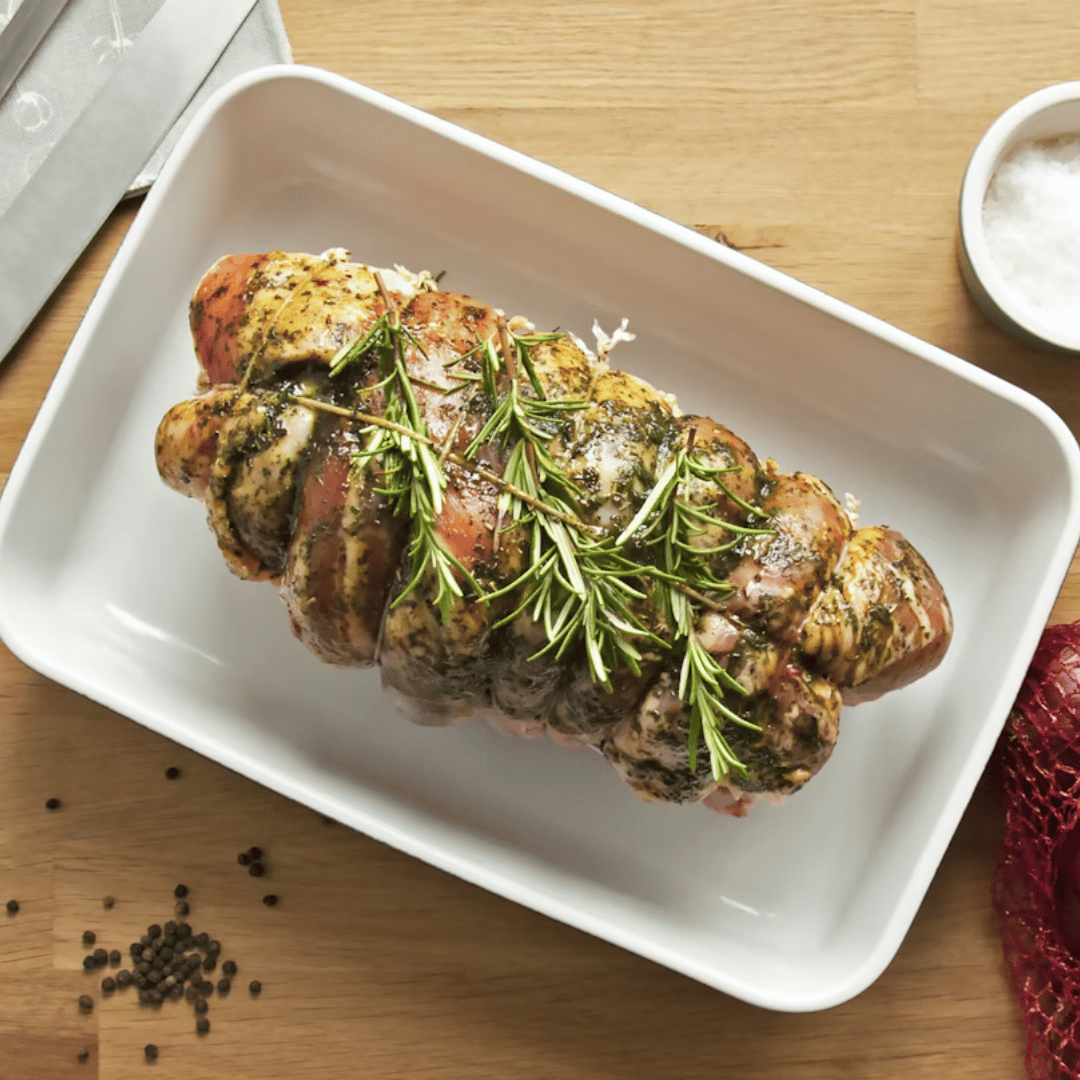
Use a small, sharp knife to make 12 to 15 deep incisions all over the surface of the shoulder, each about 2 cm deep. Push a sliver of garlic and a small piece of rosemary into each incision. This is called spiking the meat and it is one of the oldest and most effective ways to get flavour deep into a large roast. The garlic and rosemary perfume the meat from the inside during the long cook.
Mix the olive oil, lemon juice, oregano, thyme, and smoked paprika together. Rub this mixture all over the shoulder, getting into every fold and crevice. Season generously with coarse salt and cracked black pepper. Place on a tray, cover, and refrigerate overnight. The longer the better.
Step 2: Build Your Fire
Start building your fire 60 to 75 minutes before you want to place the lamb on the grill. A 4 to 5 hour cook needs a fire that can sustain consistent, low heat for the entire afternoon. That means you need to start with a proper base of coals and be prepared to add fuel steadily throughout the cook.
Use a chimney starter with good hardwood charcoal. When the coals are fully lit and grey on the surface, arrange them in a C-shape around the edges of your grill base, leaving the centre clear. This creates indirect heat with no direct flame underneath the lamb shoulder.
On the Omberg Asado Gaucho 1200, set your grates at the highest position. This is a 4 to 5 hour cook and you want maximum distance between the coals and the meat for the first two hours. The 120 cm cooking surface gives you plenty of room to manage the fire on either side while the lamb sits in the centre.
Target temperature: 150 to 170 degrees Celsius at grate height. Hold your hand 15 cm above the grate. You should be able to hold it there for 5 to 6 seconds comfortably.
Step 3: Place the Lamb, Fat Side Up
Place the shoulder fat side up on the centre of the grate, over the indirect zone with no coals directly underneath.
Fat side up means the rendering fat drips down through the meat as it cooks, basting the whole shoulder continuously from the top down. This is the key to keeping the interior moist over a 4 to 5 hour cook.
Do not touch it for the first 90 minutes. No flipping, no pressing, no checking underneath. Trust the fire.
Step 4: Manage the Fire Throughout the Cook
Every 45 minutes to 1 hour, check your fire. You are looking to maintain a steady, gentle heat throughout. Add a small amount of fresh charcoal as needed to the edges, never directly under the meat.
At the 2 hour mark, rotate the shoulder 180 degrees so the end that was facing the fire is now facing away from it. This ensures even cooking on both sides of the cut.
At the 3 hour mark, you can lower the grate one position on the Omberg Asado Gaucho 1200 to bring the lamb slightly closer to the heat. By this stage the fat cap has rendered significantly and flare-up risk is much lower. The increased heat in the final phase helps build the crust on the outside.
Step 5: The Meat Hook Option
If you want to take this recipe to the next level, the 4-Pack Meat Hooks for the Asado Gaucho 1200 let you hang the lamb shoulder vertically above the fire. This is the traditional al asador method used in Argentine and Patagonian cooking for large cuts of lamb.
Hanging the shoulder means heat and smoke circulate around all sides of the meat simultaneously. The fat renders and drips freely downward rather than pooling on the grate. The result is a more evenly developed crust on all surfaces and an interior that stays remarkably moist throughout the cook.
It is also one of the most visually striking things you can do with a grill. Your guests will not forget it.
Step 6: Temperature and the Pull Test
After 4 hours, begin checking for doneness. The shoulder is ready when the internal temperature reaches 88 to 95 degrees Celsius at the thickest point away from the bone. At this temperature the connective tissue has fully broken down and the meat will pull apart easily by hand.
The more reliable test for lamb shoulder is the pull test. Grab a visible piece of meat and tug gently. If it separates with almost no resistance, the shoulder is done. If it resists, put it back on the fire for another 30 minutes and check again.
Step 7: Rest and Pull
Remove the shoulder from the grill and place it on a wooden board. Rest for 20 minutes, loosely covered with foil. This is non-negotiable for a cut this size. The residual heat continues working during the rest period and the juices redistribute throughout the meat.
After resting, use two forks or your hands to pull the meat apart directly at the table. Lamb shoulder is not a sliced cut. It falls into large, soft pieces naturally along the grain. The bone pulls free cleanly once the meat has fully rested.
Serve straight from the board with chimichurri, warm bread, and whatever else is on the table.
Pro Tips for Perfect Lamb Shoulder
Buy Dutch lamb when you can. Zeeland or Texel lamb raised on the salt marshes has a natural mineral quality that no other lamb matches. It is available from specialty butchers and online meat suppliers across the Netherlands. The difference in flavour compared to imported lamb is real and significant.
Spike deeply and generously. The garlic and rosemary incisions are the most important prep step. Every piece of meat pulled from the shoulder should carry some of that garlic-rosemary flavour. Twelve incisions is a minimum. Fifteen to eighteen is better.
Patience with the fire is the skill. The most common mistake with a long cook like this is reacting to every temperature fluctuation. A slow fire does not need constant intervention. Check every 45 minutes, make small adjustments, and resist the urge to manage it every 15 minutes. Calm fire management produces better results than anxious fire management.
Use the long-handled tongs from the Omberg BBQ Tool Set for managing a large shoulder safely on a hot grill. Long-handled tools are not optional for a cut this size over an open fire.
Cover your grill after the cook. The Asado Gaucho 1200 Cover is worth having for exactly the kind of Dutch autumn afternoons that follow a summer of serious grilling. A protected grill lasts significantly longer and is always ready for the next cook.
Avec quoi l'accompagner
Chimichurri works beautifully with lamb. The acidity of the vinegar and the freshness of the parsley cut through the rich fat of the shoulder. Make it the day before for the best result. (See our chimichurri recipe on the Omberg blog)
Herb yoghurt sauce is a Dutch-friendly alternative or addition. Greek yoghurt, fresh mint, garlic, lemon juice, and a pinch of salt. Served cold alongside the warm pulled lamb, the contrast is excellent.
Warm flatbread or Dutch crusty bread served alongside the pulled lamb. Each person fills their own bread from the board. This is relaxed, communal eating at its best.
Grilled vegetables on the Omberg 1200 in the final 30 minutes of the lamb cook. Whole peppers, thick courgette slices, and halved red onions placed on the side of the grate over moderate heat. The wide cooking surface of the Omberg Asado Gaucho 1200 means everything runs simultaneously without compromise.
Roasted potatoes in the embers. Wrap whole potatoes in foil with olive oil, salt, and rosemary. Place them beside the coals for the last 90 minutes of the lamb cook. They come out soft, smoky, and slightly crispy where the foil has let some heat through.
Wine and Drink Pairings
Slow-cooked lamb shoulder on the fire is rich, herby, and deeply flavoured. The pairing should complement rather than compete.
Red wine, European first choice: A Cotes du Rhone from the southern Rhone Valley in France is the natural partner for lamb with herbs. Grenache-based blends from this region carry a garrigue quality — wild herbs, sun-baked earth, dried lavender — that mirrors the rosemary and oregano in the lamb marinade almost exactly. Available widely in Dutch supermarkets and wine shops at very reasonable prices. Look for producers like Chateau Pesquie or Domaine de la Janasse.
Red wine, Spanish option: A Spanish Garnacha from Navarra or Aragon is the value pick. The same grape as Grenache, grown in Spain, with earthy fruit character and a freshness that works well with lamb. Available in most larger Dutch supermarkets under names like Campo de Borja or Coto de Imaz.
Red wine, Argentine option: A Mendoza Malbec is always a valid choice. For lamb, choose a mid-weight style rather than a heavily extracted one. A Lujan de Cuyo Malbec around 13 to 13.5 percent alcohol sits beautifully alongside the herb-crusted fat of the shoulder.
Beer, Dutch option: A Dutch abbey-style Dubbel from one of the smaller Dutch craft breweries. The malt sweetness, dark fruit, and gentle spice of a Dubbel alongside slow lamb is genuinely good. Look for Brouwerij 't IJ or De Molen for craft options widely available in the Netherlands.
L'histoire culturelle
Lamb has been central to Dutch cooking for centuries. The polders and salt marshes of the Dutch coast have produced exceptional lamb since the Middle Ages. Zeeland lamsschouder has a regional identity that locals take genuine pride in.
What Dutch lamb cooking has traditionally lacked is a method that matches the quality of the ingredient. The oven is capable. The open fire is exceptional.
In Argentine Patagonia, whole lamb on the fire is the pinnacle of asado culture. The Patagonian landscape — cold, windswept, enormous — is not entirely different from the Dutch coastal regions in character. Both places produce animals that move freely over large, mineral-rich terrain. Both places have a culture built around communal eating and simple, honest food.
The Omberg Asado Gaucho 1200 brings the Patagonian method to the Dutch garden. The adjustable grates, 120 cm cooking surface, and open-fire design give Dutch lamb the treatment it has always deserved.
Foire aux questions
Where do I buy good lamb shoulder in the Netherlands?
Most Dutch supermarkets carry lamb shoulder, labeled as lamsschouder. For the best quality, look for Zeeland or Texel lamb from a specialty butcher or online suppliers like Meatpoint or De Groene Weg. Bone-in shoulder is what you want for this recipe. If you can only find boneless, the recipe still works but ask your butcher to tie it so it holds its shape during the long cook.
How do I know when lamb shoulder is done?
Internal temperature of 88 to 95 degrees Celsius at the thickest point, away from the bone. Or use the pull test. Grab a visible piece of meat and pull gently. If it separates with almost no resistance, it is done. If it holds firm, add another 30 minutes and test again.
Can I start this recipe the same day without an overnight marinade?
Yes. Even 2 to 3 hours of marinating makes a meaningful difference. The overnight marinade gives deeper flavour penetration but the garlic and rosemary spiked into the incisions do most of the flavour work regardless. Same-day prep is fine if that is what your schedule allows.
What if I do not have the Meat Hooks?
Cook the shoulder flat on the grate, fat side up. This is the standard method described in the main recipe and produces an excellent result. The meat hooks are an upgrade, not a requirement. You can add them to your setup any time. (See Omberg Accessories)
Can I use the Omberg Built-In for this recipe?
Absolutely. The Asado Gaucho 1200 Built-In handles this recipe with no adjustments needed. Set the grates at the highest position for the long slow phase and lower them one position for the final crust development stage.
How do I store leftover lamb shoulder?
Pulled lamb shoulder keeps well in the refrigerator for 3 days in a sealed container. It reheats beautifully in a pan with a small amount of water or stock to prevent it drying out. Cold pulled lamb shoulder on bread with herb yoghurt the next day is, genuinely, one of the better lunches you will have.
The Best Sunday Your Garden Has Ever Seen
A whole lamb shoulder, four hours on the fire, pulled at the table with good wine and good company. This is what the Omberg Asado Gaucho 1200 was built for.
120 cm of cooking surface. Height-adjustable grates. Open-fire design that turns a Dutch garden into something closer to the pampas for an afternoon.